
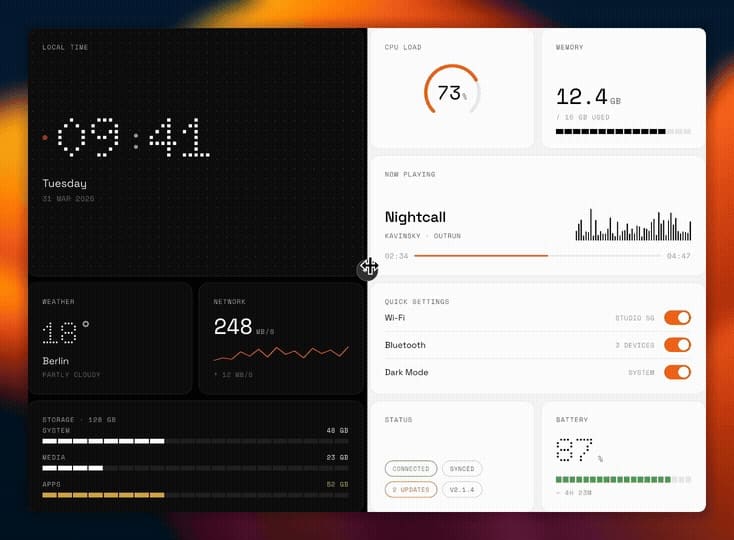
The ecosystem growing around AI coding tools is no longer just about generating functions, fixing bugs, or wiring APIs together. It is increasingly moving into design as well. One small but telling example is Nothing Design Skill, an open GitHub project that packages the visual language associated with Nothing devices into a reusable skill for Claude Code.
The idea is straightforward: instead of repeatedly feeding the same design instructions into an AI assistant, the author has turned those rules into a structured, reusable layer that Claude can call on demand. In practice, that means a developer can prompt Claude with “Nothing style” or trigger /nothing-design and receive an interface shaped around a very specific aesthetic: monochrome, highly typographic, industrial, and deliberately restrained.
On the surface, this may look like a niche experiment for fans of a particular design language. But it points to a broader shift in how people are starting to work with AI development tools. Prompts are gradually being packaged into reusable systems. Instead of describing the same preferences over and over again, users are turning those preferences into portable context modules that can guide the assistant more consistently.
That is what makes this project more interesting than its size might suggest.
More than a prompt, less than a full framework
Nothing Design Skill is not a traditional UI framework, and it is not trying to be a fully featured design platform. It sits somewhere in between. According to the repository, it is a design system skill for Claude Code inspired by Nothing’s visual language, built around a small but focused set of principles.
Those principles include a three-layer hierarchy for information, a typography stack built around Space Grotesk, Space Mono, and Doto, support for both light and dark modes, and a series of visual conventions such as segmented progress bars, mechanical toggles, dot-matrix motifs, and instrument-style widgets.
The project also makes a point of being practical rather than purely conceptual. The repository says Claude can output designs in HTML/CSS, SwiftUI, or React with Tailwind, which is important because it pushes the result closer to something developers can actually build on, not just admire in a mockup.
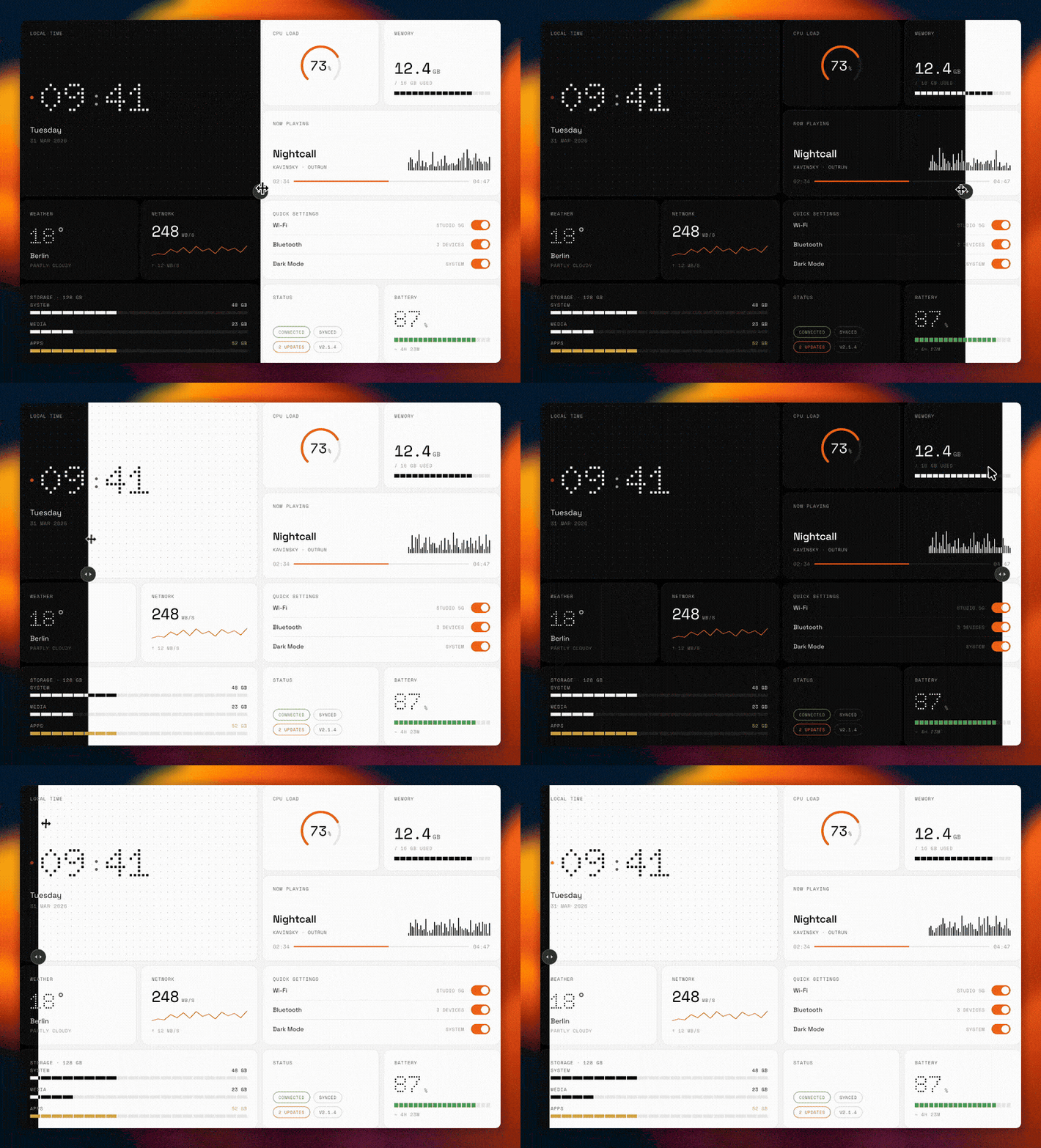
In that sense, the skill functions less like inspiration and more like a design constraint engine. It narrows the space in which the AI operates, and that is often exactly what design-oriented development workflows need. One of the biggest weaknesses of generative UI today is that it tends toward safe, generic output. Projects like this are trying to fix that by giving the model a stronger identity to work with.
A small repository that says something larger
At the time of writing, the repository is still very small by GitHub standards, with a modest commit history and a relatively limited footprint. But the numbers are not really the point here. What matters is the pattern it represents.
The package includes a SKILL.md file describing design philosophy and workflow, plus reference files covering tokens, components, and platform mappings. That structure matters. It means the skill is not just a loose collection of aesthetic hints. It is organized more like a miniature design system, with rules for colors, fonts, spacing, motion, buttons, cards, tables, overlays, and mappings for different implementation targets.
That makes the project a useful case study in how design is becoming more programmable through AI tooling. Designers and developers have long used style guides, component libraries, and design systems to keep products visually coherent. What is changing now is that those rules can be embedded directly into AI-assisted workflows.
Instead of telling a model from scratch to “make it minimal, premium, black-and-white, typographic, and slightly industrial,” users can hand off a package that already encodes those choices. That reduces repetition, improves consistency, and makes the model behave more like a collaborator working inside a system than a general-purpose generator improvising from vague instructions.
Why this matters for AI-generated interfaces
There is a practical problem behind the appeal of projects like Nothing Design Skill. AI-generated UI is often technically usable but visually bland. It tends to default to familiar SaaS patterns, indistinct cards, generic spacing, and an overall feel that is hard to distinguish from the output of countless other prompts.
That is not always a flaw. Sometimes generic is good enough. But as AI-generated frontends become more common, sameness is becoming one of the biggest design liabilities of these tools. A startup prototype, a portfolio site, and an internal dashboard can all start to look like variations of the same system.
The value of a skill like this is that it pushes in the opposite direction. It gives the model stronger guardrails, stronger taste, and a more recognizable visual target. It does not magically turn Claude Code into a replacement for a good designer, but it does make it easier for developers to get closer to a coherent look without reinventing the prompt every time.
That is especially relevant for teams working quickly. In early-stage product development, the difference between “generic AI UI” and “a consistent design language” can be the difference between something that feels disposable and something that feels intentional.
The rise of reusable context
The bigger takeaway from Nothing Design Skill is not really about Nothing at all. It is about the growing importance of reusable context in AI tooling.
As AI assistants become more embedded in everyday development, users are discovering that raw prompting does not scale very well. Repetition becomes tedious, and consistency becomes fragile. Skills, templates, reference packs, and workflow layers are emerging as the next logical step. They turn one-off instructions into reusable infrastructure.
That is why even a small repository like this matters. It shows how people are beginning to treat AI assistants less like chatbots and more like programmable environments. The future of AI coding may not just depend on better models, but on better ways of structuring the context those models operate within.
Nothing Design Skill is a tiny example of that shift. But it is also a clear one. It suggests that the next wave of AI-assisted development will not just be about generating faster code. It will also be about generating more deliberate design.
For a field currently flooded with interchangeable AI interfaces, that may end up mattering quite a lot.