
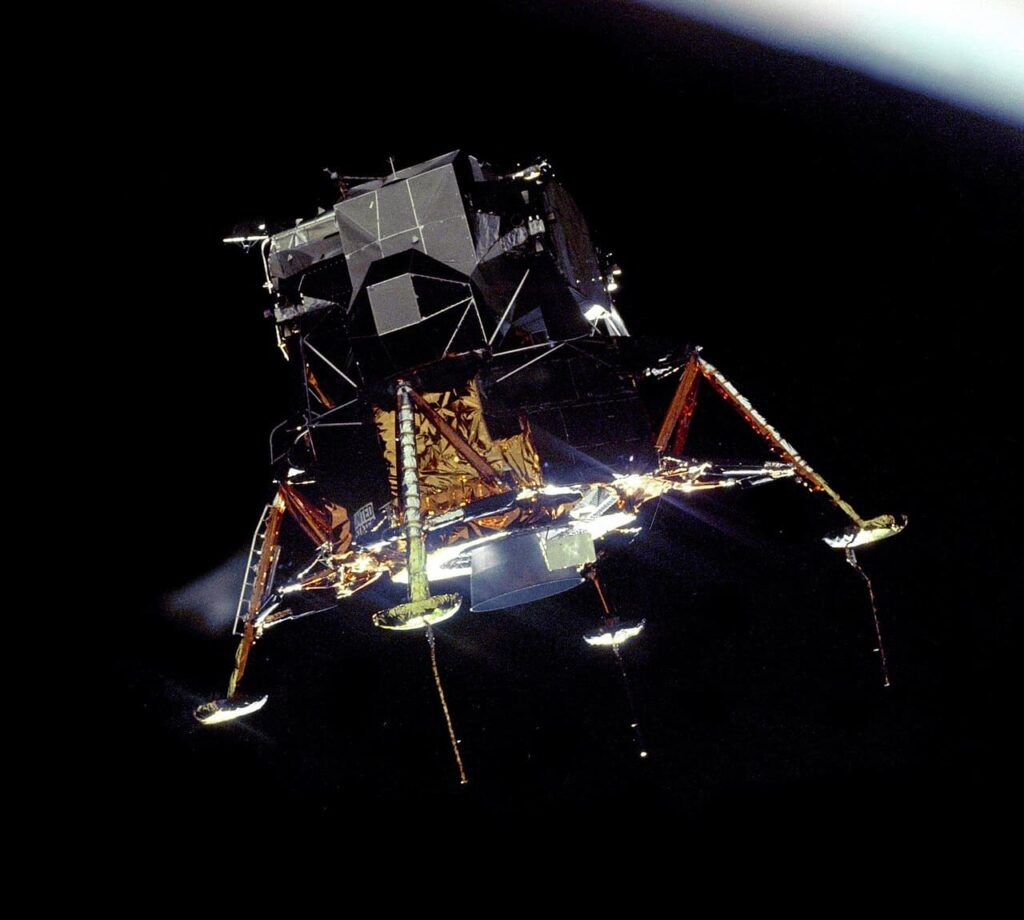
The software that helped take Apollo 11 to the Moon is still available in the open and can be read, downloaded and even compiled today through GitHub. The story often resurfaces as if it were a brand-new release, but the repository has actually been public for years and remains one of the most remarkable pieces of computing history available online.
What is preserved there is not a modern re-creation or a simplified educational rewrite. It is a transcription of the original source code for the Apollo Guidance Computer, the system used by both the Command Module and the Lunar Module during Apollo 11. The main repository, maintained by Chris Garry, contains two major codebases: Comanche055 for the Command Module and Luminary099 for the Lunar Module. The repository describes them as public-domain material digitized with the help of the Virtual AGC project and the MIT Museum.
That detail matters because this is much more than a historical curiosity. The Apollo 11 code offers a direct look at how mission-critical software was written in the late 1960s, when memory and processing power were tiny by modern standards. It also reveals the discipline of an era in which software had to be reliable, efficient and heavily documented because failure was not an option. In practical terms, the repository has become a unique window into the engineering culture behind one of the most important technological achievements of the 20th century.
The machine that ran this software was astonishingly limited by today’s standards. According to the Virtual AGC project, the Apollo Guidance Computer had 2.048 words of RAM, equivalent to 3.840 bytes, and 36.864 words of read-only memory, equivalent to 69.120 bytes. Its maximum execution rate was about 85.000 instructions per second. It weighed 31,8 kilograms and worked with the famous DSKY interface, the display-and-keyboard unit used by astronauts to interact with the system.
Seen from 2026, those figures are almost surreal. A modern smartwatch, smartphone or budget laptop surpasses that hardware by an absurd margin. And yet this was the computer architecture that supported navigation and guidance for the first crewed Moon landing. That contrast is a big part of why the code still fascinates developers, engineers and historians. It is not just old software. It is a reminder that great engineering is not always about having more compute, but about using limited resources with extraordinary precision.
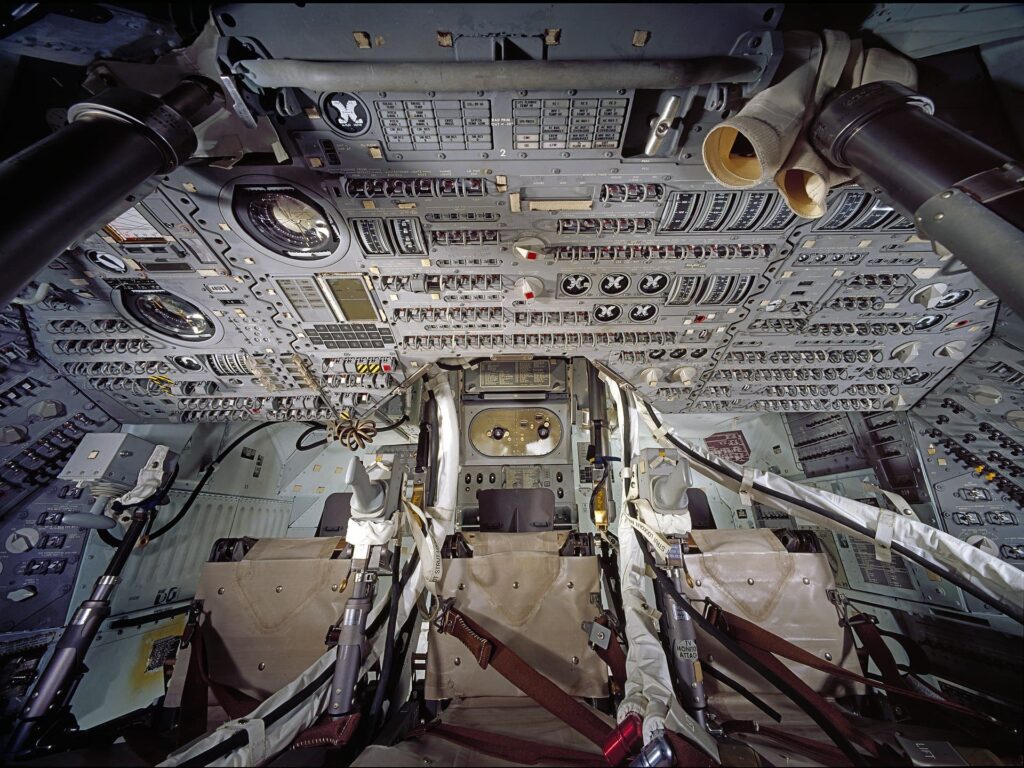
Another important point is that Apollo 11 did not run on a single universal codebase. The spacecraft used two guidance computers with essentially the same hardware, but they ran different programs because their jobs were different. Comanche055 was the software for the Command Module, while Luminary099 powered the Lunar Module that landed on the Moon. That split is preserved in the repository and helps explain why the code is organized into two separate mission-critical software stacks.
Browsing the repository today is not just an exercise in nostalgia. Files such as ALARM_AND_ABORT.agc or THE_LUNAR_LANDING.agc make it possible to see how the system handled alarms, abort logic and landing-related routines. The code is written in assembly language, but it also includes comments, labels and structure that make it surprisingly readable for anyone interested in low-level software. The repository documentation also preserves key historical references, including Margaret H. Hamilton, listed in the approvals section as the Colossus Programming Leader. That gives the archive not only technical value, but also human and institutional context.
The story also continues beyond reading the files. The Virtual AGC project provides the tools needed to assemble and emulate much of this original software on modern machines. In other words, this is not just a static archive. It is part of a broader effort to preserve, reconstruct and run the software environment of the Apollo guidance systems, including associated simulators and documentation for multiple missions. That makes the Apollo 11 code useful not only for historians, but also for students, retrocomputing enthusiasts and developers interested in how tightly constrained systems were built.
There is, however, one point worth clarifying. Although many recent posts describe this as if NASA had only just open-sourced the code, the public timeline tells a more nuanced story. The code has been available for years through the GitHub repository and through the wider Virtual AGC ecosystem. What is really happening now is less a new release than a renewed wave of attention around a project that continues to impress new generations of programmers.
That may be the best way to understand why this repository still matters. Nearly six decades after Apollo 11, its software remains relevant not because anyone is going to fly to the Moon with it again, but because it shows what disciplined engineering looks like when every byte matters. In an era defined by AI, hyperscale infrastructure and vast software stacks, Apollo 11’s code still stands as a lesson in clarity, efficiency and technical ambition.
Frequently Asked Questions
Where can people read the Apollo 11 source code today?
The original Apollo 11 AGC source code is publicly available on GitHub in the chrislgarry/Apollo-11 repository.
Is this really the original Apollo 11 code?
The repository presents it as a transcription of the original Apollo 11 Guidance Computer source code, digitized from hardcopy material held by the MIT Museum with support from the Virtual AGC project.
Can the Apollo 11 software still be compiled or emulated?
Yes. The Virtual AGC project provides tools and documentation to assemble and emulate AGC software on modern systems.
How much memory did the Apollo Guidance Computer have?
According to the Virtual AGC project, it had 2.048 words of RAM, or 3.840 bytes, plus 36.864 words of read-only memory, or 69.120 bytes.