Agent-Ready Web: Why your HTML (and your server) matter more than ever
The web is quietly getting a new class of visitors: AI agents. Not “users” in the classic sense, but automated systems that read pages to summarize them, answer questions, and
The web is quietly getting a new class of visitors: AI agents. Not “users” in the classic sense, but automated systems that read pages to summarize them, answer questions, and

“RIP OpenClaw” has been making the rounds in the agent-builder crowd lately—less as an obituary, more as a signal: people want agents that are actually usable day-to-day without handing them
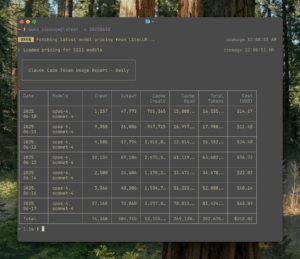
As Claude Code becomes more embedded in day-to-day engineering work, a different kind of question keeps popping up — not “can it do it?”, but “what is it really costing

AI coding assistants have moved past the “cool demo” phase. For sysadmins, SREs, and developers who live in terminals, the question is no longer whether AI can write code, but

When Bjarne Stroustrup—the designer and original implementer of C++—speaks to students, the message is rarely about chasing the next trend. In a recent university appearance in Spain, the veteran computer
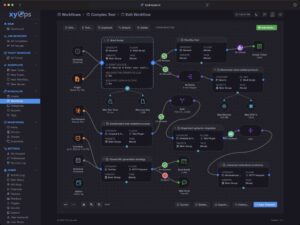
In many operations teams, automation and observability have evolved in layers: a handful of cron jobs, an orchestration tool for pipelines, a monitoring stack for metrics, and an alerting system
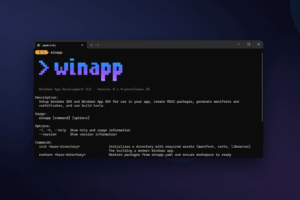
Microsoft has announced the public preview of winapp, a new open-source command-line tool designed to simplify the Windows app development lifecycle—especially for teams building outside the traditional Visual Studio/MSBuild workflow.

Bitadir.com, one of the longest-running Spanish-language blog directories still online, has completed a comprehensive modernization of a web application that had been living in the PHP 4/5 era for roughly
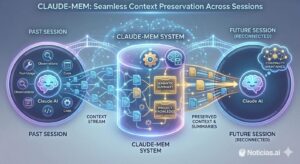
For sysadmins and developers running Claude Code in a real project, the biggest productivity killer is rarely “model quality” — it’s context loss. You hit a token limit, restart a
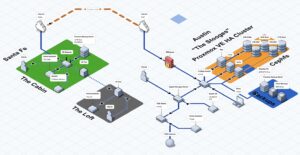
In infrastructure teams, documentation tends to break in predictable ways: diagrams live in someone’s laptop, get exported as static images, then drift out of date the moment a subnet changes