
Backups are rarely anyone’s favorite topic… until they fail. In small businesses, professional offices, and distributed teams, the same problem tends to repeat: multiple computers, different operating systems, inconsistent habits, and a fragile outcome that depends more on human discipline than on a reliable system. In that context, Minarca has been gaining attention as a self-hosted, open-source alternative that tries to solve the hard part: centralizing backups and making restores accessible without turning it into an endless project for the administrator.
Minarca presents itself as a cross-platform backup solution for Linux, Windows, and macOS, designed around a central server and lightweight agents installed on the machines being protected. Its promise is straightforward: an end-to-end platform that keeps you in control of your backup strategy—without locking you into closed services or third-party infrastructure.
From rdiff-backup and rdiffweb to an “all-in-one” solution
Minarca didn’t come out of nowhere. The project is built on two well-known tools in the open-source ecosystem: rdiff-backup and rdiffweb. The former is the backup engine, based on a model that blends mirroring with incremental history. The latter provides a web interface to browse repositories and restore data. Minarca integrates both and adds the “product layer” that’s often missing when a powerful tool doesn’t translate into an accessible experience for less technical users.
According to the project’s own description, Minarca grew out of years of real-world use of rdiffweb and rdiff-backup, with a public release arriving later, in 2019. The repository also notes that Minarca Server is written in Python, released under the AGPLv3 license, and has been actively developed by IKUS Software since at least April 2015.
The technical advantage: “reverse incremental” backups for faster, safer restores
Ultimately, every backup conversation comes down to the same questions: how fast can you restore, how much history do you keep, and what happens if something gets corrupted? Here Minarca highlights the concept of a reverse incremental differential backup, positioning it as a way to improve resilience against data corruption and make it easier to restore the most recent version.
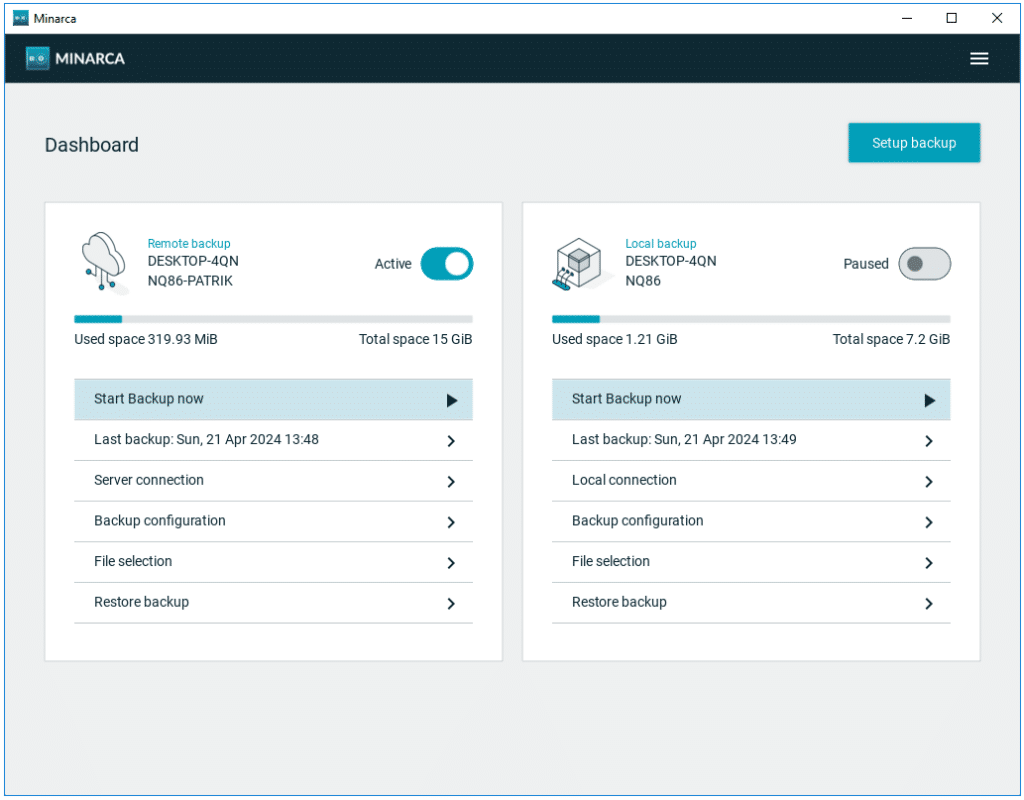
This aligns with the classic rdiff-backup approach: the destination becomes a current mirror of the source, while older versions are preserved as “reverse diffs” that let you roll back in time. The goal is to combine the benefits of a mirror (quick access to the latest state) and an incremental (historical versions) without forcing slow rebuilds for common restore scenarios.
For sysadmins, that distinction matters: most real incidents don’t require reconstructing an entire archive—they require bringing the latest working state back online as quickly as possible. Minarca positions itself right there, while still supporting selective file and folder restores when the issue is more surgical.
Centralized management, multi-user support, and web-based restores
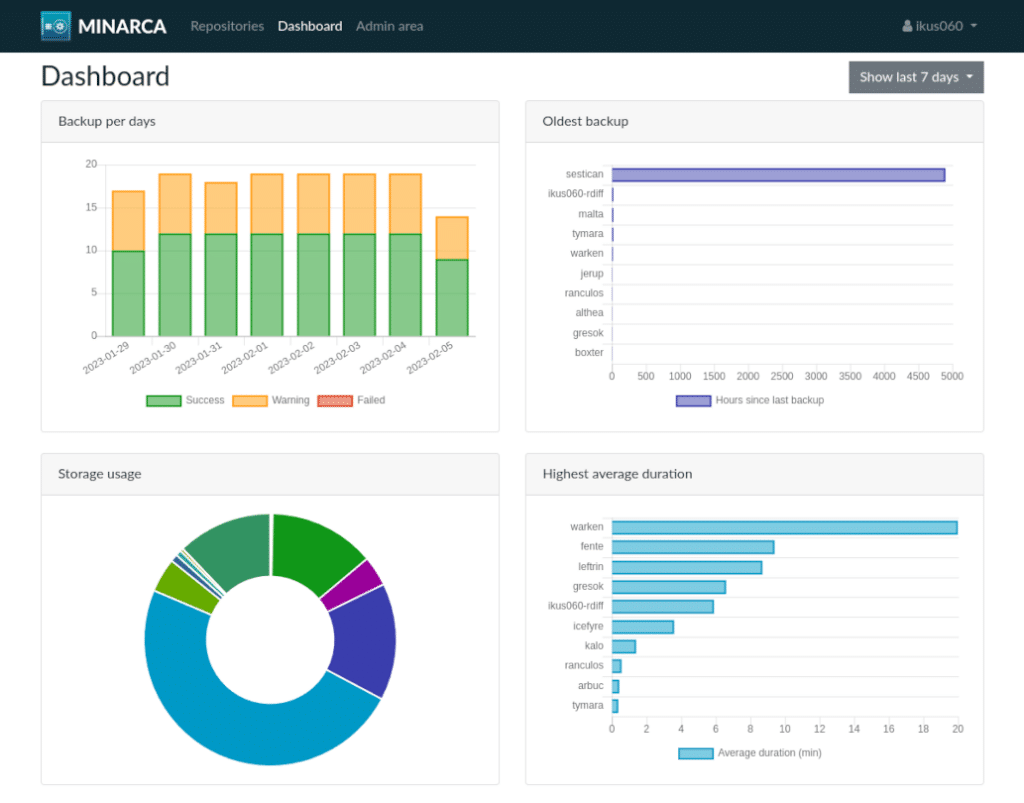
Where Minarca tries to stand out is day-to-day usability. Its official site emphasizes centralized management through a web interface (dashboard, logs, statistics), multi-tenant capabilities (multiple users with repositories and quotas), backups to multiple destinations, and restore paths that range from the agent—better suited for large restores—to the web UI for smaller or more targeted recoveries.
It also stresses that backups are file-based and produce a directory “mirror,” which can help with recovery even outside the application if you need to access data directly at the filesystem level.
This approach makes particular sense for two profiles: service providers or IT teams managing multiple machines (or multiple customers), and small businesses that need something more serious than a “toy” backup tool but can’t afford weeks of complexity.
A project in motion: what the 6.1 branch adds
The project’s changelog shows active development. 6.1.2 (June 25, 2025) highlights a macOS fix to prevent duplicate entries when adding a file. 6.1.1 (June 20, 2025) focuses on warning handling—warnings are now captured and logged properly.
The biggest update is 6.1.0 (June 13, 2025): it adds support for Debian Trixie and Ubuntu Plucky 25.04, plus Python 3.11 and 3.12; introduces a “manual-only” backup schedule option; adds pre/post command hooks per backup job; and includes support for kdialog for KDE environments. It also adds patterns to back up macOS Mail and Messages (SMS), documents REST API endpoints, and automatically generates CLI documentation.
On the usability side, it refreshes the restore interface (merging custom and full restores, multi-select, in-place restores or subfolder restores, plus search/filtering) and improves log viewing performance. Backup behavior improvements include scheduling even when running on battery in Windows, better exception logging, and sensible default exclusions (like iCloud Trash and Office temporary files). On the security/connectivity side, one notable change is using the OS certificate store for HTTPS.
A public demo to test the workflow
Minarca provides a publicly accessible test environment (test.minarca.net) with published default credentials, allowing users to explore the interface and workflow without installing the server first. It’s a relatively uncommon move in this category, and it makes it easier to evaluate the product’s approach before deploying in production.
The bigger takeaway is clear: Minarca aims to be more than a bundle of components. It’s trying to offer a practical backup experience for real teams—one with a usable interface, clear control, and a reasonable deployment path. In a space where “the backup works”… until it doesn’t, that ambition is worth watching.
FAQs
How do you install Minarca Server on Debian and start centralized backups?
Minarca Server targets Debian/Ubuntu deployments with packages and repositories, paired with agents on endpoints. The common path is: deploy the server, define users/repositories, then link each machine via the agent and configure schedules.
What’s the difference between Minarca and rdiffweb if both rely on rdiff-backup?
Rdiffweb is primarily a web interface to browse and restore rdiff-backup repositories. Minarca integrates rdiffweb and adds a full workflow: endpoint agents, onboarding/linking, and a more turnkey operational experience across multiple devices.
What does “reverse incremental” mean in Minarca and why does it matter for recovery?
The “reverse incremental” approach aims to keep the latest backup directly available as a mirror, while storing differences backward so you can recover older versions. In many incidents, that can reduce friction when restoring the latest state quickly is the main goal.
Can you restore from the web UI, or do you have to restore from the agent?
Minarca supports both: smaller, selective restores via the web interface, and large restores via the local agent for maximum speed and control—depending on the scenario and the workflow described in its documentation.