
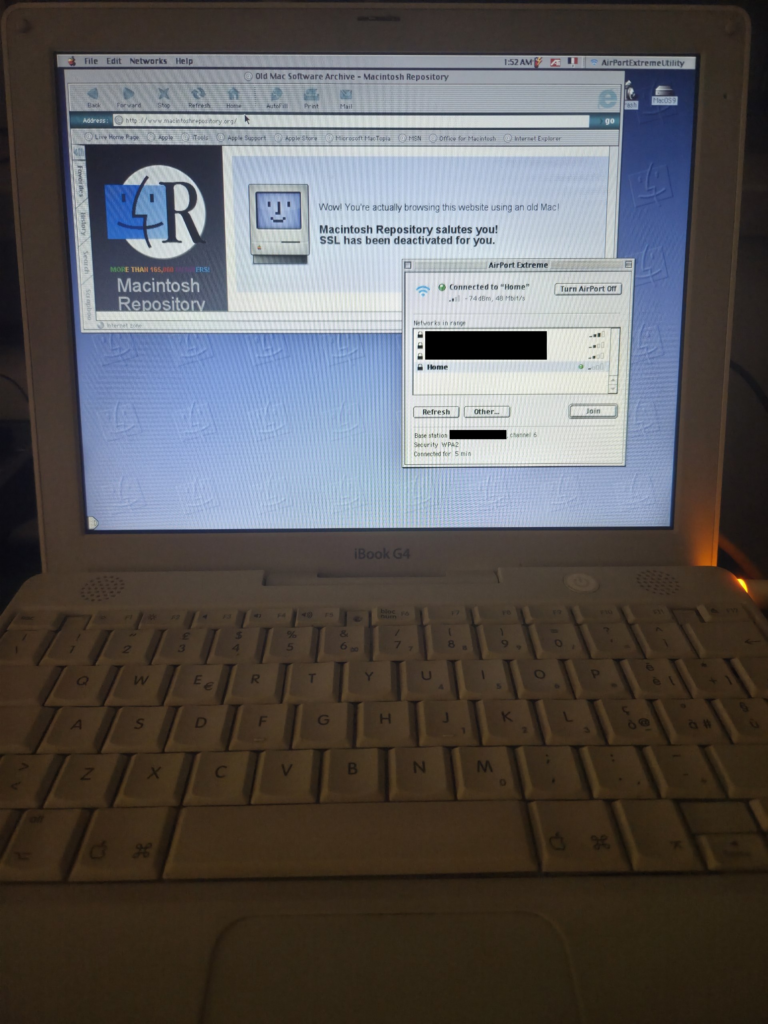
A developer has made Apple’s first-generation AirPort Extreme card, built around the Broadcom BCM4306 chip, work on Mac OS 9 and join WPA and WPA2 networks, something Apple never shipped for that operating system. The project, published on GitHub by SimoSbara under the GPL-2.0 licence, does not write a new driver from scratch. It runs the Linux 5.15 wireless code unchanged (b43, ssb, mac80211 and cfg80211) together with wpa_supplicant 2.11, and only adds the layer that maps the Linux kernel interfaces onto Mac OS 9 and Open Transport.
The AirPort Extreme driver for Mac OS 9 in 20 seconds
- It supports the first-generation AirPort Extreme card (BCM4306, 802.11b/g).
- Open, hidden and WPA/WPA2 Personal networks work; WEP and WPA Enterprise do not.
- It reuses Linux 5.15 and wpa_supplicant 2.11 code without changes.
- The main limitation today: real throughput is only a few KB/s.
Mac OS 9 was left behind when Apple introduced AirPort Extreme in 2003: the card was only officially supported on Mac OS X, and WPA2 arrived years later. Anyone keeping an iBook or PowerBook G4 on Mac OS 9 for nostalgia, legacy software or collecting had almost no way to join a modern Wi-Fi network. This project takes an unusual route for the retro scene: instead of writing a driver, it ports the environment the Linux driver expects to find.
The Linux kernel, inside Mac OS 9
The architecture is the interesting part for sysadmins. The repository ships the Linux 5.15.225 sources unchanged for the chip (b43), the bus (ssb) and the 802.11 stack (mac80211 and cfg80211), plus wpa_supplicant 2.11 for authentication. Around them, a compatibility layer implements on Mac OS 9 the kernel API that code needs: sk_buff, net_device, timers, PCI and crypto. The result is an Open Transport driver, the classic Mac OS networking stack, that exposes the card as just another port.
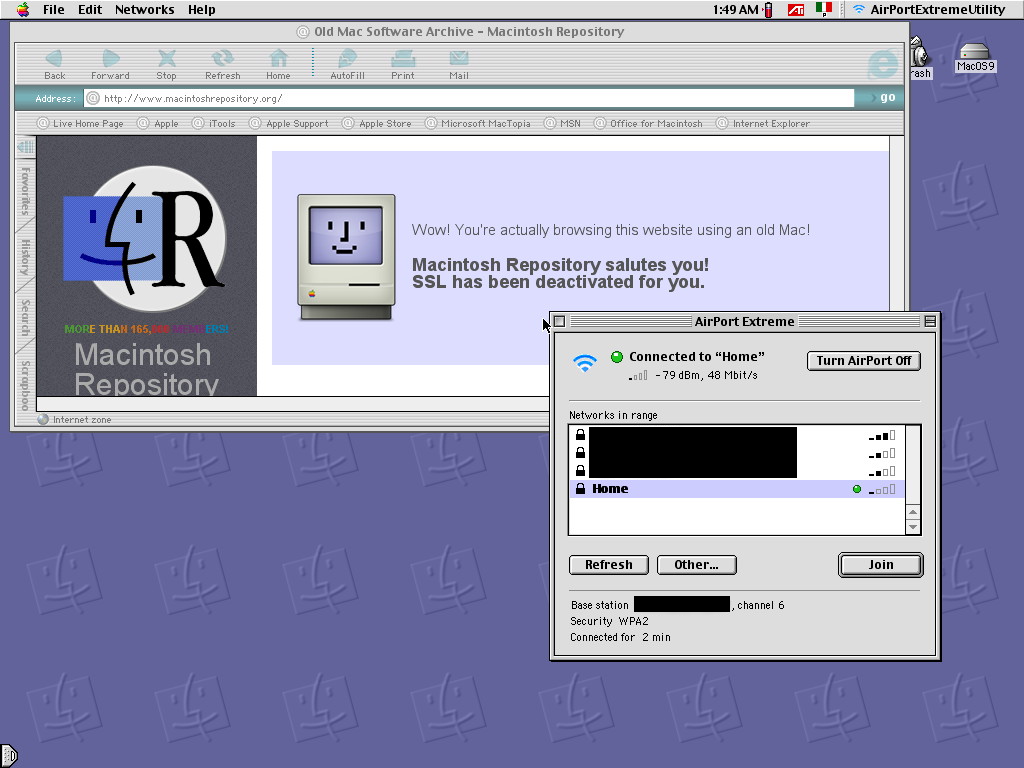
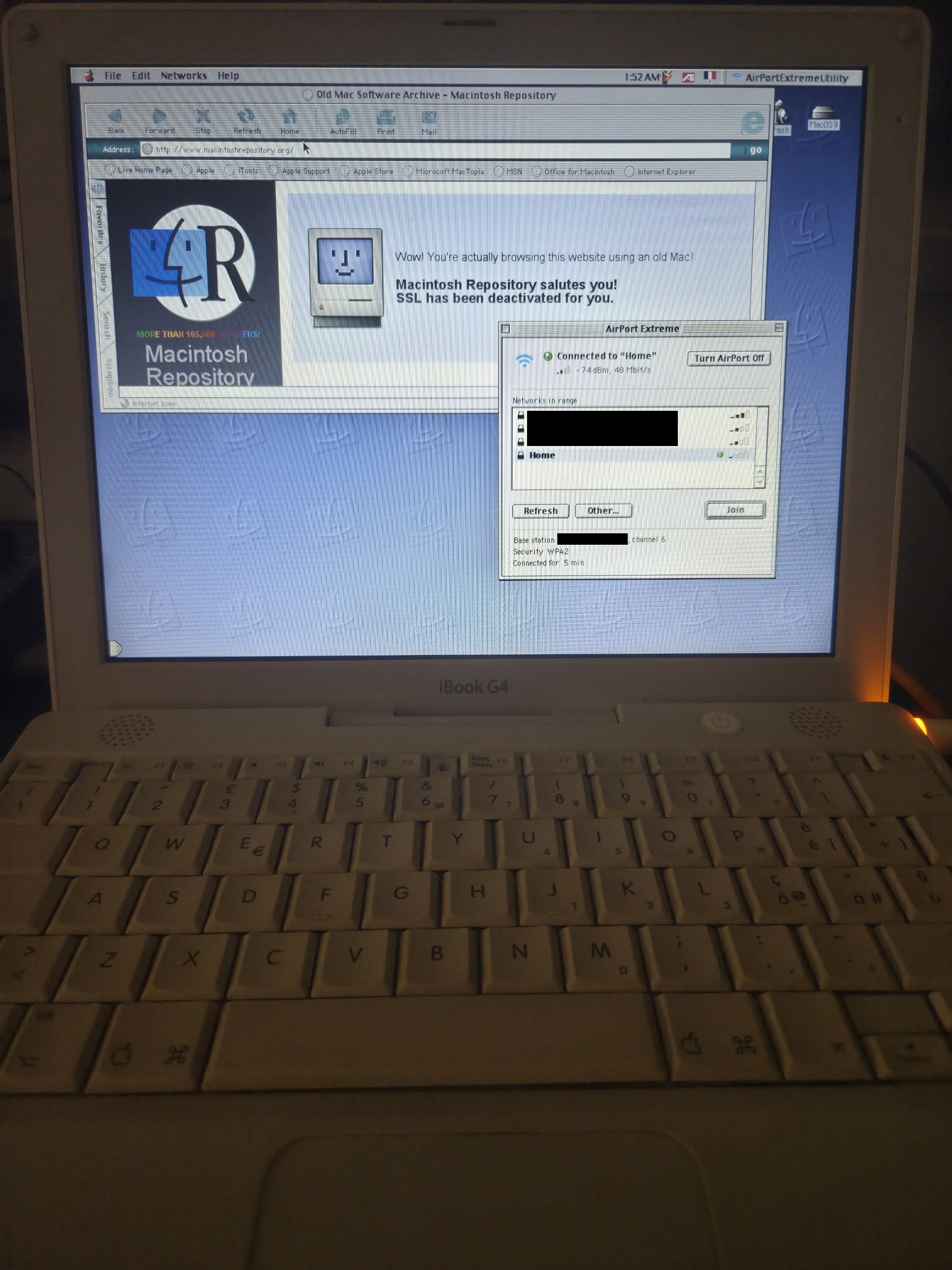
The Mac then runs TCP/IP (DHCP or manual) and AppleTalk over Wi-Fi. The AirPort Extreme application lists networks in range with their signal, turns the radio on and off, remembers networks and stores passwords in the Keychain. At startup the Mac rejoins the last network. The project has been tested on an iBook G4 with a revision 3 BCM4306.
Installation: bring your own firmware
The card needs Broadcom’s firmware, which is not free and cannot be distributed with the project. You extract it once on a Linux machine (WSL on Windows works) with b43-fwcutter, exactly as Linux users do:
sudo apt install b43-fwcutter
wget https://www.lwfinger.com/b43-firmware/broadcom-wl-6.30.163.46.tar.bz2
tar xjf broadcom-wl-6.30.163.46.tar.bz2
b43-fwcutter -w . broadcom-wl-6.30.163.46.wl_apsta.oCode language: JavaScript (javascript)
This creates a b43 folder that goes on the Mac inside a folder named AirPort Extreme Firmware in the System Folder; only four files are used (ucode5.fw, pcm5.fw, b0g0initvals5.fw and b0g0bsinitvals5.fw). Then download the latest release, decode it with StuffIt Expander, put the extension in Extensions, the startup item in Startup Items and the application wherever you like. After a restart, pick the AirPort Extreme port (“Ethernet Slot B” on an iBook G4) and DHCP in the TCP/IP control panel, open the application, double-click your network and type the password.
For troubleshooting, the project includes AirPortStatus, which writes a report with network names anonymised, AirPortTester, which runs the same code as a normal application and logs every step, and OTCheck, which checks the Open Transport ports. The preferences file accepts advanced settings such as the regulatory domain (country=), more verbose logging, or PIO transfers instead of DMA.
The catch: it works, but slowly
The author is upfront about the big open issue: the connection works at only a few KB/s. The access point often does not hear the frames the card sends, including acknowledgements and sometimes parts of the WPA handshake, so it retransmits and falls back to 1 Mbit/s; some phone hotspots give up and disconnect. Linux 3.2 on the same iBook, with the same access point, reaches 24 to 36 Mbit/s, so the hardware is not the bottleneck.
DMA versus PIO, interrupts versus polling, the firmware version, the antenna, several radio setup values that changed between Linux 3.2 and 5.15, and signal strength have all been ruled out. The developer is asking for help and ships an expert mode in the Tester with measurement tools. Builds use the Retro68 PowerPC toolchain with Apple’s Universal Interfaces and CMake.
Frequently asked questions
Which cards are supported?
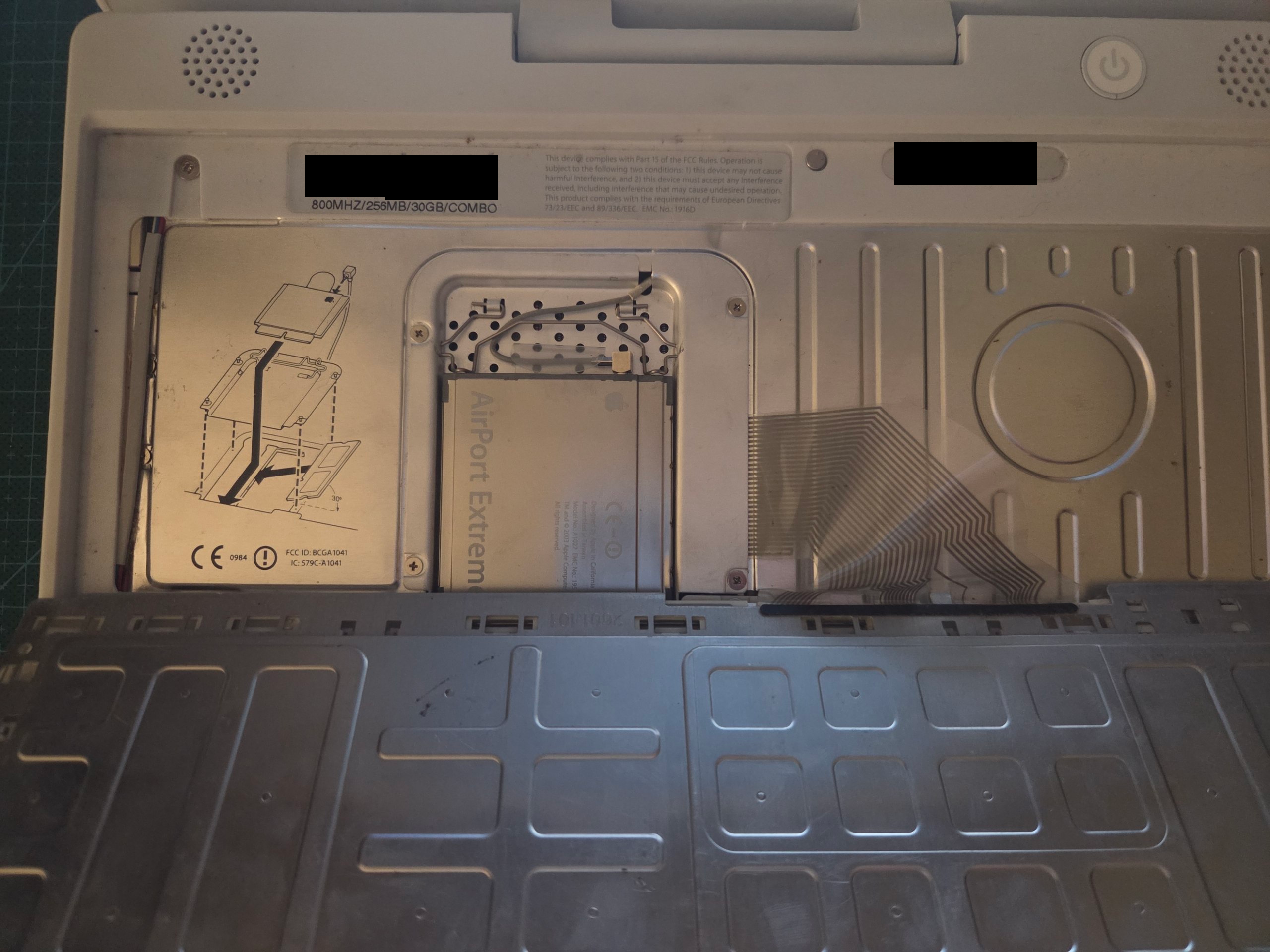
Only the first-generation AirPort Extreme card with the Broadcom BCM4306 chip (802.11b/g). It has been tested on an iBook G4.
Which Wi-Fi security modes work?
Open and hidden networks, plus WPA and WPA2 Personal. WEP and WPA Enterprise (802.1X) are not supported.
Why do I have to extract the firmware myself?
Broadcom’s firmware is proprietary and cannot be distributed with the project, so you extract it with b43-fwcutter on Linux.
How fast is it?
For now, only a few KB/s, because of a transmission problem the author is still investigating.
Sources: