
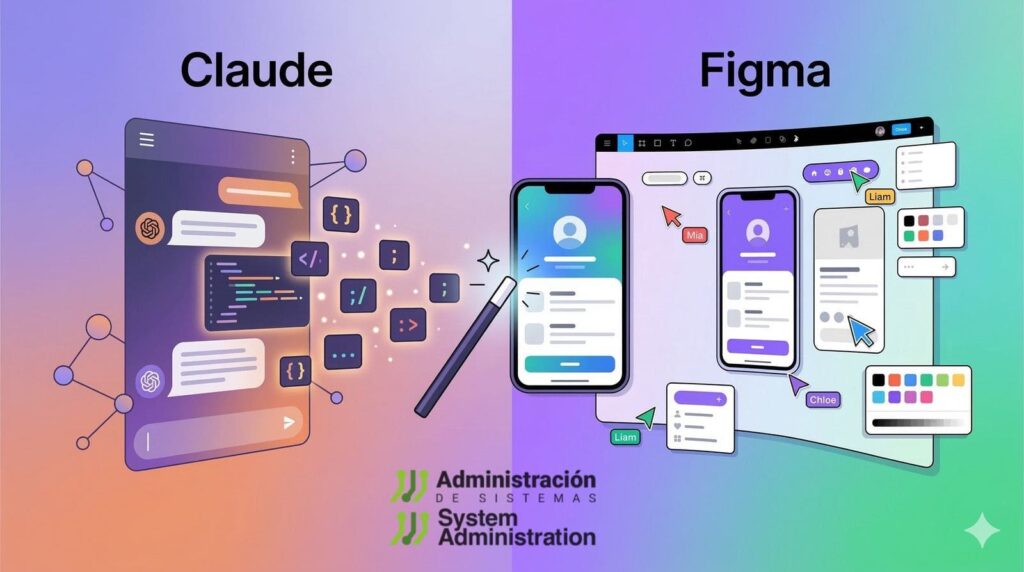
The promise of building a complete website in just a couple of hours with Artificial Intelligence is no longer confined to polished product demos or marketing-stage experiments. A viral thread on X has pushed that idea back into the spotlight, claiming that a full website can now be created in around two hours by combining Claude Opus 4.6 with Figma Make. The post presents the workflow as a shortcut to producing “$5,000 websites” with nine prompts and minimal friction, a message designed as much for attention as for instruction.
What makes the claim worth taking seriously is not the tone of the thread, but the fact that the underlying stack is real. Figma’s own documentation confirms that Claude Opus 4.6 is available as one of the selectable models inside Figma Make, alongside options such as Claude Sonnet 4.6 and Gemini. Figma positions Opus 4.6 for “challenging and dynamic projects,” while also noting that non-default models can take longer, behave differently, and consume substantially more credits per task.
That matters because Figma Make is not described as a simple mockup generator. Figma defines it as an AI-driven, prompt-to-app tool that turns ideas and existing Figma designs into functional prototypes, web apps, and interactive UI, with a workflow built around conversation, iteration, and direct editing of generated code. Users can start from prompts, attach existing Figma designs, bring in images, and refine the result through the chat panel and preview.
From viral claim to plausible workflow
The viral thread’s central pitch is straightforward: use Claude Opus 4.6 for the high-level thinking and Figma Make for turning that structure into a polished interface. According to the mirrored thread, the author claims to have built a “$5,000 client website” in 118 minutes using Claude for architecture and reasoning, and Figma Make for UI, interactions, and deployment. The post then lays out nine prompts covering architecture, design systems, content, and page structure. As a social media claim, that is obviously promotional. As a workflow outline, however, it is no longer far-fetched.
Anthropic’s own product announcement adds more weight to that interpretation. In its Opus 4.6 launch material, Anthropic includes a quote from Figma Chief Design Officer Loredana Crisan saying that Claude Opus 4.6 generates complex, interactive apps and prototypes in Figma Make, and that it can translate detailed designs and multi-layered tasks into code on the first try. That does not prove every viral promise about two-hour websites, but it does show that the integration is being positioned for serious design-to-code workflows, not just lightweight experimentation.
The broader shift is easy to see. Website creation used to be divided into distinct stages: concept, wireframe, visual design, implementation, and publishing. Tools like Figma Make are collapsing more of those stages into one conversational loop. A user can describe the site, refine the structure, attach design references, adjust components, and edit the generated code in the same workspace. That does not remove the need for judgment, but it does shorten the path from idea to something visible and interactive.
“Free” is where the pitch starts to wobble
The weakest part of the viral message is the word free. Figma’s documentation makes clear that access to Figma Make depends on plan and seat type. The product is available for Full seats on paid plans, while users on Dev, Collab, or View seats can try it in drafts with more limited capabilities. Publishing Figma Make files is restricted to Full seats, and organization admins can turn web publishing on or off at the org level.
There is also the issue of AI credits. Figma states that AI features across the platform, including Figma Make, operate on a credit system. Every seat includes credits, but the monthly amount varies by plan and seat type. Full seats range from 500 credits per month on Starter to 4,250 on Enterprise, while Dev, Collab, and View seats receive fewer capabilities and lower access. Figma also explicitly warns that credit consumption for newer models is still developing and that Claude Opus 4.6 uses substantially more credits per task than other available options.
So the more accurate conclusion is not that anyone can produce unlimited professional websites for free, but that the cost and time required to create credible first versions of websites have dropped sharply. That is still a meaningful development. A landing page, early product site, marketing prototype, or investor-facing demo can now move much faster from rough idea to something functional enough to review, share, and iterate.
What this means for agencies and freelancers
The real impact is less about total replacement and more about rising expectations. Clients and internal teams no longer need to wait days to see a visual direction or a structured prototype. If the first working draft appears in hours instead of weeks, then the baseline for “fast enough” changes. That affects agencies, freelancers, and in-house product teams alike. The pressure is not simply that AI can make websites. It is that AI can now make the first acceptable version much faster than before. This is an inference based on the documented capabilities of Figma Make and Anthropic’s framing of Opus 4.6 for complex creative work.
That does not mean professional web work disappears. Brand strategy, accessibility, SEO implementation, performance engineering, analytics, content quality, and long-term maintenance still sit beyond the scope of a viral prompt pack. But the mechanical work of turning a rough brief into a navigable structure is becoming easier to compress. In that sense, the viral thread is both right and overstated at the same time. The workflow is real. The creative shortcut is real. The idea that this automatically produces finished, client-ready websites for everyone, at no meaningful cost, is still an exaggeration.
Frequently Asked Questions
Can you officially use Claude Opus 4.6 inside Figma Make?
Yes. Figma’s help documentation lists Claude Opus 4.6 as one of the AI models available in Figma Make.
Does Figma Make create only prototypes, or can it create web apps too?
Figma describes Figma Make as a prompt-to-app tool for building functional prototypes, web apps, and interactive UI.
Is it really free to build unlimited websites with this workflow?
Not in the broad sense implied by viral posts. Figma Make access depends on plan and seat type, and AI features use a credit system with monthly limits.
Did Figma itself say Claude Opus 4.6 works well for this kind of use case?
Yes. Anthropic’s Opus 4.6 announcement includes a quote from Figma saying the model generates complex, interactive apps and prototypes in Figma Make and can translate detailed designs into code on the first try.