
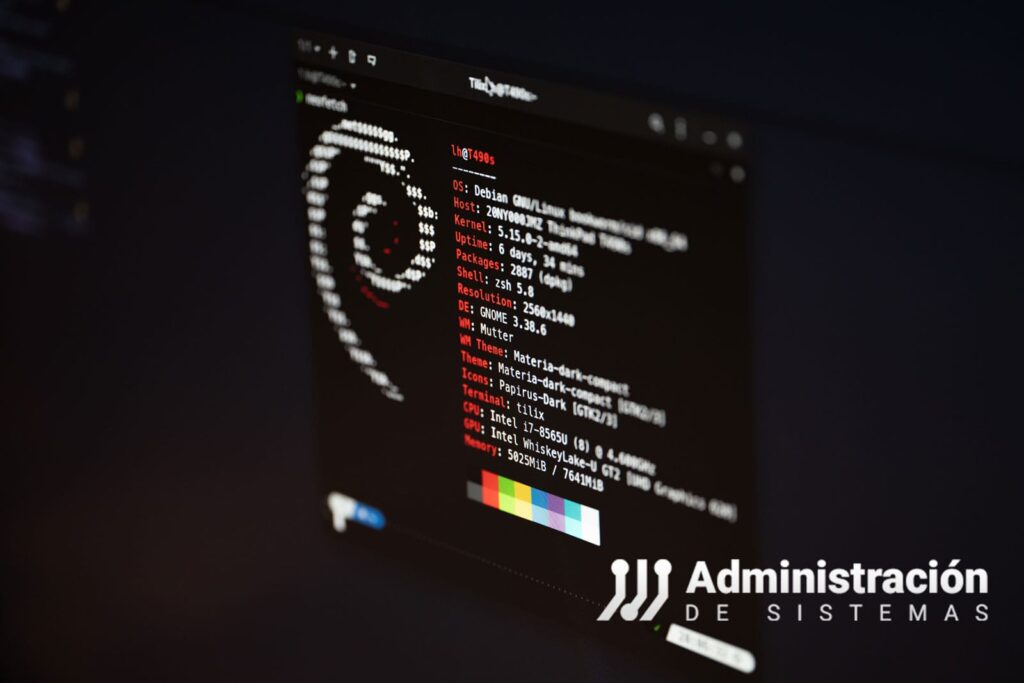
Linux can no longer be explained only through performance, stability or scalability. Those qualities still matter, and they remain part of its identity, but recent developments across the Linux ecosystem point to a broader phase: software supply-chain security, digital sovereignty, quantum-resistant infrastructure, responsible use of AI and hardware sustainability.
The conversation has shifted because the technology environment around Linux has also changed. Artificial intelligence is accelerating vulnerability discovery, Rust is gradually expanding inside the kernel, Debian is strengthening reproducible builds, Rocky Linux is moving towards post-quantum cryptography, and public-sector institutions in Europe, including France, are reinforcing their commitment to GNU/Linux and open-source technologies. These are not isolated signals. Together, they show a Linux ecosystem increasingly tied to trust.
More CVEs, more AI and more pressure on maintainers
One of the most visible changes is taking place around kernel security. Since 2024, the Linux kernel project has acted as a CNA, a CVE Numbering Authority, for vulnerabilities within its own scope. This has made vulnerability tracking more systematic, but it has also created the impression that kernel CVEs are appearing faster than ever. In practice, many of these records reflect a more formalised process for documenting fixes that reach supported stable branches.
That distinction matters. Not every CVE means a major incident, and not every bug has the same level of exposure. For administrators and security teams, the useful response is not panic, but disciplined patch management, asset visibility and a clear understanding of which kernels are actually deployed in production.
AI is adding another layer of complexity. Automated tools can help identify bugs, reproduce crashes and review code paths, but they can also generate large volumes of duplicated, poorly verified or low-value reports. Kernel maintainers are already dealing with the burden of separating useful findings from noise.
The problem is not that AI finds bugs. The problem appears when AI turns security reporting into a flood of reports that still require human triage. In open-source infrastructure, where maintainers are already under pressure, this can become a real operational issue. A good AI-assisted report needs to be reproducible, concise, technically grounded and useful to the people who must fix the problem.
| Trend | What is happening | Why it matters | Risk if poorly managed |
|---|---|---|---|
| Kernel CVEs | Linux now handles CVE assignment more directly within its scope | Better traceability of vulnerabilities and fixes | Treating every CVE as a major security crisis |
| AI-generated reports | Automated vulnerability reports are increasing | AI can speed up bug discovery | Maintainers may be overwhelmed by duplicates and noise |
| Rust in the kernel | New components and drivers can increasingly use Rust | Reduces some classes of memory-safety bugs | Requires careful integration with existing C code |
| Reproducible builds | Debian continues to advance package reproducibility | Improves software supply-chain transparency | Packages and build processes need stricter discipline |
| Post-quantum cryptography | Rocky Linux is adopting quantum-resistant capabilities | Prepares infrastructure for future cryptographic risks | Compatibility issues if deployed without planning |
| Digital sovereignty | France is strengthening public-sector Linux and open-source adoption | Reduces dependence on non-European proprietary stacks | Migrations can fail without training and support |
| Sustainability | Linux extends the useful life of hardware | Reduces premature replacement and e-waste | Old systems still need security updates and maintenance |
Rust, reproducible builds and post-quantum cryptography
Rust continues to move into Linux in a measured way. The kernel is not being rewritten in Rust, and that was never the realistic path. The change is more practical: enabling selected components, drivers and subsystems to benefit from a language that offers stronger memory-safety guarantees than C in certain scenarios.
This matters because many serious vulnerabilities are linked to memory errors: use-after-free bugs, buffer overflows, invalid references and similar issues. Rust does not remove the need for review, testing or careful design, but it can reduce entire categories of mistakes when used properly. In the kernel, where a single bug can compromise system stability or security, that reduction has real value.
Debian is advancing another important piece of the trust puzzle: reproducible builds. The idea is simple to explain and difficult to achieve at scale. If two independent parties build the same source code using the same process, they should obtain identical binaries. This makes it possible to verify that distributed packages actually correspond to the published source code.
For a distribution as large and influential as Debian, reproducibility is not just an academic exercise. It is part of software supply-chain security. In an era of dependency attacks, compromised build systems and increasing concern over tampered binaries, reproducible builds give users, developers and organisations a stronger basis for verification.
Rocky Linux is also bringing future-facing security into the conversation through post-quantum cryptography. The move reflects a broader concern across infrastructure teams: data protected today may need to remain secure for many years, and future quantum computers could weaken or break some of the cryptographic systems currently in use.
Post-quantum cryptography is not something organisations should switch on blindly. Compatibility matters. Legacy systems, clients, libraries and services may not be ready for stricter policies. But the direction is clear: serious infrastructure projects are starting to prepare for a world where quantum-resistant algorithms become part of normal security planning.
Linux as a tool for sovereignty and sustainability
Linux is also gaining relevance in Europe’s public-sector technology debate for reasons that go beyond engineering. Digital sovereignty has become a strategic concern. Governments want more control over software stacks, data, procurement, interoperability and long-term dependency on foreign technology providers.
France is one of the clearest examples. Its public-sector strategy around GNU/Linux and open-source technologies reflects a wider effort to reduce dependence on proprietary systems and reinforce domestic and European control over digital infrastructure. This does not mean that open source automatically solves every sovereignty problem, but it gives public institutions more room to inspect, adapt, host and share the technologies they use.
For public administrations, the value of Linux is not only licensing cost. It is also transparency, auditability, portability and control over the software lifecycle. A public body that relies on open standards and open-source components has more options when contracts change, suppliers disappear, or strategic requirements evolve.
Adoption patterns still vary widely. Linux remains a minority platform on consumer desktops, but it is deeply embedded in servers, cloud infrastructure, supercomputing, routers, embedded systems, Android, industrial devices and public digital services. Its presence is not always visible to the end user, but it supports much of the digital world that user depends on every day.
Sustainability adds another important angle. Linux is one of the most effective ways to extend the useful life of hardware that would otherwise be pushed aside by commercial upgrade cycles or increasingly demanding operating-system requirements. Many laptops, desktops and small servers that no longer fit the roadmap of proprietary platforms can still run modern Linux distributions effectively.
That does not mean keeping unsupported machines in production forever. Security still matters. Old hardware needs maintained software, updates and sensible use cases. But when done properly, Linux helps keep capable devices out of landfill and reduces unnecessary replacement. In education, local administration, community projects, laboratories and small businesses, that can make a real difference.
The deeper reading is clear: Linux is entering a phase where performance and scalability are no longer enough to explain its importance. Kernel security, AI-assisted vulnerability discovery, Rust, reproducible builds, post-quantum cryptography, digital sovereignty and sustainability are now shaping the future of the ecosystem. Linux remains an operating system, but it is also a way to build digital infrastructure with more transparency, more control and more long-term resilience.
Frequently asked questions
What is changing in Linux kernel security?
The Linux kernel project now has a more direct role in assigning CVEs within its scope, which improves vulnerability tracking. Security teams still need to assess severity, exposure and patch availability instead of treating every CVE as equally urgent.
Why is AI becoming controversial in Linux security?
AI can help find bugs, but it can also generate duplicated or poorly verified vulnerability reports. The Linux community needs useful, reproducible and technically clear reports, not large volumes of automated noise.
What does Rust bring to the Linux kernel?
Rust can reduce some memory-safety risks in new kernel components and drivers. It does not replace C across the kernel, but it gives developers a safer option for selected areas where reliability and security are especially important.
Why do reproducible builds matter for Debian?
Reproducible builds make it possible to verify that binary packages match their published source code. This strengthens transparency and reduces risk in the software supply chain.