
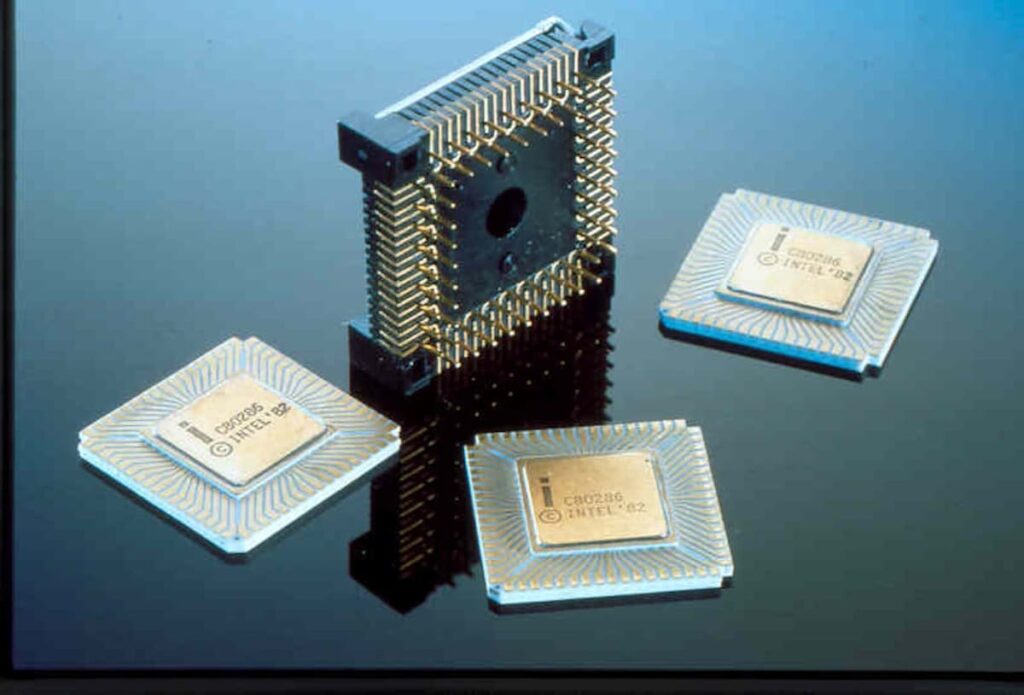
On February 1, 1982, Intel introduced a processor that would quietly reshape personal computing: the 80286, better known as the 286. In an industry that often celebrates “firsts” and flashy breakthroughs, the 286’s impact was more subtle—but arguably more important. It helped turn the PC from a capable hobbyist machine into something businesses could treat as a serious work platform, and it laid groundwork for the standards and compatibles that flooded offices through the late 1980s and into the early 1990s.
The 286 didn’t just make computers faster. It pushed the PC toward ideas that felt more like minicomputers and workstations at the time: memory protection, privilege levels, and a more formal separation between system and application behavior. In short, it was one of the earliest moments when the PC started acting less like a “single-task appliance” and more like a system that could, eventually, be managed and trusted.
The big leap: from 1 MB thinking to 16 MB ambition
Early PCs built around the Intel 8086 and Intel 8088 lived in a world where 1 MB of addressable memory was a hard ceiling in the classic real-mode model. That limitation shaped everything—from application design to operating system assumptions.
The 286 blew a hole in that ceiling. With a 24-bit address bus, it could address up to 16 MB of physical memory. For the era, that was a massive expansion and a clear statement of intent: the PC was meant to scale.
But the 286’s most forward-looking feature wasn’t just “more memory.” It was Protected Mode—a more structured operating model designed to support:
- Stronger memory isolation
- Privilege levels (so not every program could do everything)
- A better foundation for multitasking operating systems
That was the promise: a more orderly PC, one that could run complex workloads without falling apart the moment a program misbehaved.
The PC/AT moment: when the 286 became the business baseline
The 286’s real-world story took off when IBM put it at the center of the IBM PC/AT in 1984. The PC/AT didn’t just bring a faster CPU—it helped define a “business PC” template: more expandability, a sense of professional-grade capability, and a platform that the wider industry could imitate.
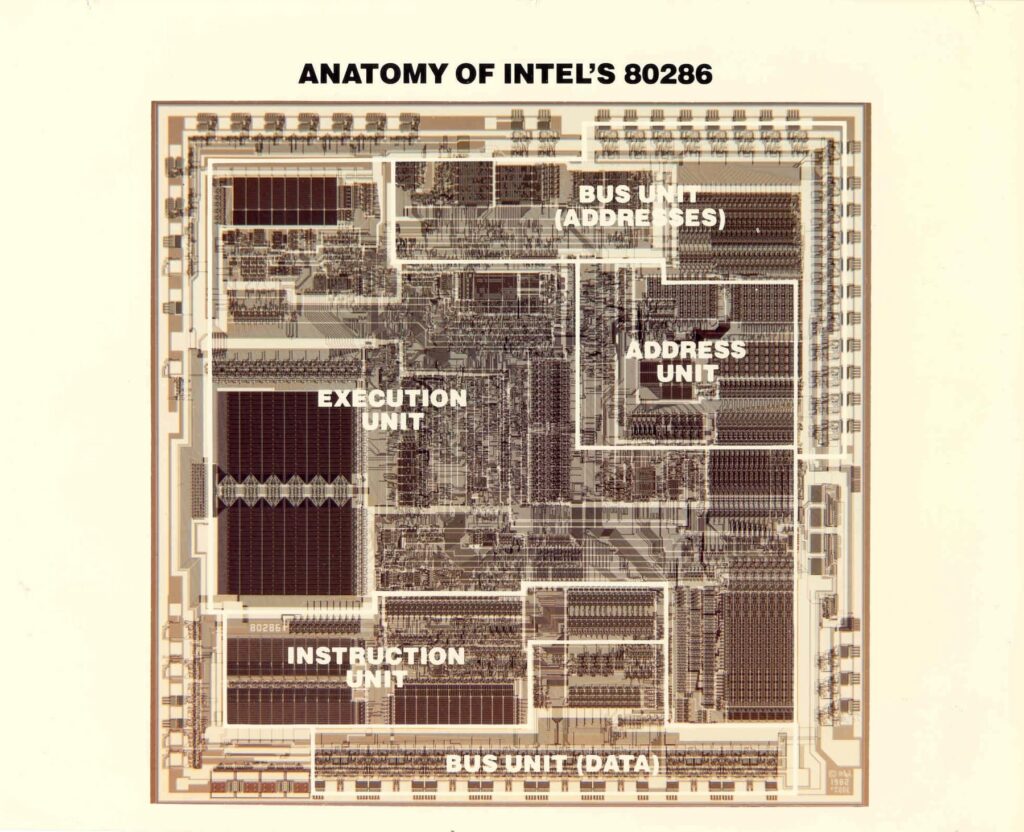
And imitate it did. The AT line effectively became a compatibility target, and the market responded with a wave of AT-compatible machines—clones that spread the platform into offices at scale. The result was less about one model and more about an ecosystem: boards, expansion cards, peripherals, and software that assumed “AT-like” behavior.
In practical terms, the 286 helped normalize the PC as a workplace standard—something not merely tolerated by IT departments, but relied on.
Why Protected Mode didn’t “win” overnight
Here’s the twist: despite its advanced Protected Mode, most 286-era computing still revolved around MS-DOS and the ocean of software written for it. And DOS software—especially the popular, practical kind—often assumed it could directly access hardware or memory in ways that Protected Mode was specifically designed to prevent.
There was also a notoriously awkward technical constraint: the 286 was designed so that switching into Protected Mode was straightforward, but switching back to Real Mode wasn’t—not without a reset. Hardware and firmware workarounds existed (notably in AT-class machines), but the overall experience wasn’t clean, seamless, or developer-friendly.
This mattered because software ecosystems move at the speed of compatibility. Businesses didn’t buy new PCs to rewrite their applications; they bought them to run the same work—faster and more reliably. The 286 offered a more modern operating model, but the world was still anchored to DOS assumptions.
The numbers that made it practical
Even when it wasn’t running the most advanced OS features, the 286 delivered real value. It came in many speed grades, climbing over time toward 25 MHz in later versions and compatible implementations. And for users doing day-to-day business computing—spreadsheets, word processing, and early database workloads—those gains were tangible.
The 286 also supported an optional math coprocessor, the Intel 80287, which could accelerate floating-point-heavy workloads such as CAD, certain scientific applications, and more advanced spreadsheet models. Not every office needed it, but in technical environments it helped the PC compete with more expensive systems.
Quick spec snapshot
| Spec | Intel 80286 (286) |
|---|---|
| Launch | February 1982 |
| Data width | 16-bit |
| Address width | 24-bit |
| Max addressable memory | 16 MB |
| Optional FPU | Intel 80287 |
| Typical max clock (family) | Up to 25 MHz |
The long fade: good enough lasts a long time
One reason the 286 remained common well into the 1990s wasn’t that it stayed on top—it didn’t. It’s that the market is full of “good enough” plateaus. Even after the Intel 80386 arrived and pushed the platform forward, the cost and inertia of the installed base kept 286 systems in service for years.
Software also played a role in the transition. When Microsoft Windows 3.1 became widely popular, it helped move expectations upward and accelerated adoption of later CPUs in the mainstream. The 286 still had a place, but the center of gravity shifted.
In hindsight, the 286 looks like a bridge: it introduced the right ideas early, even if the industry took time to fully exploit them.
Why the 286 still matters in 2026
The Intel 80286 isn’t remembered because it was the fastest chip of its decade. It’s remembered because it marks a moment when the PC platform stopped being “just enough” and started aiming at principles that still define modern computing: protection, control, and scalability.
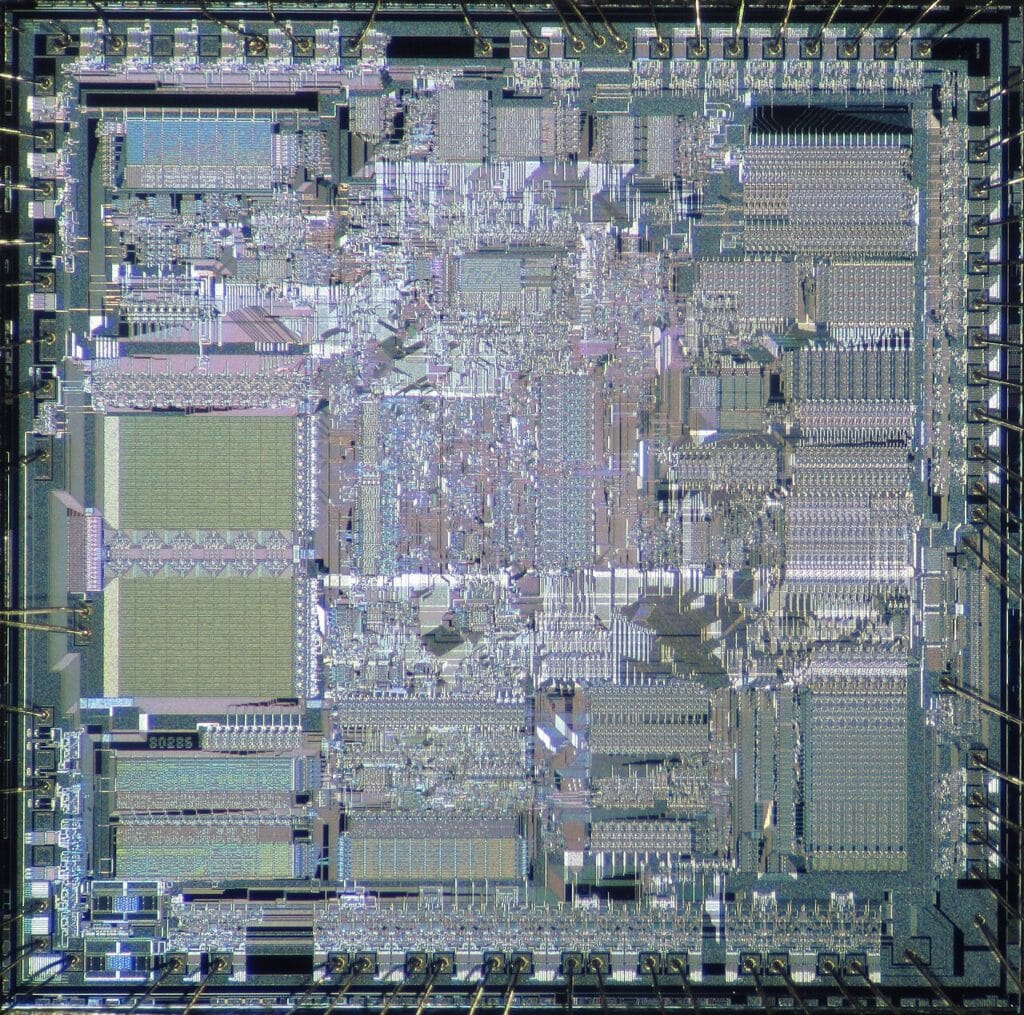
It also shows a recurring pattern in tech history: hardware can be ready before the ecosystem is. The 286’s Protected Mode was a serious step forward, but the software world needed years—and the next generation of CPUs—to fully capitalize on it. Still, the path from early PCs to modern systems runs straight through that February 1982 milestone.
Frequently asked questions
What made the Intel 80286 a turning point for business PCs?
It combined higher performance with a roadmap mindset: up to 16 MB addressing and a Protected Mode foundation that hinted at more secure, multitasking-capable systems—key for enterprise adoption and the rise of AT-compatible machines.
Why didn’t most 286 PCs use Protected Mode all the time?
Because the software world was dominated by DOS-era assumptions, and Protected Mode made many “normal” behaviors (like direct hardware access) harder or unsafe. Switching back to Real Mode also wasn’t elegant on the 286, which slowed adoption of Protected Mode operating environments.
What’s the difference between the IBM PC/AT era and earlier IBM PC models?
The AT era brought a more expandable, business-oriented baseline and helped standardize a compatibility target that the clone market followed—turning the PC into a scalable industry platform rather than a single vendor’s product line.
Was the 80287 coprocessor actually useful, or mostly a niche add-on?
It was meaningful for specific workloads—CAD, engineering calculations, some scientific and financial modeling—where floating-point math mattered. For general office use, many systems ran fine without it.
Images via Intel.