
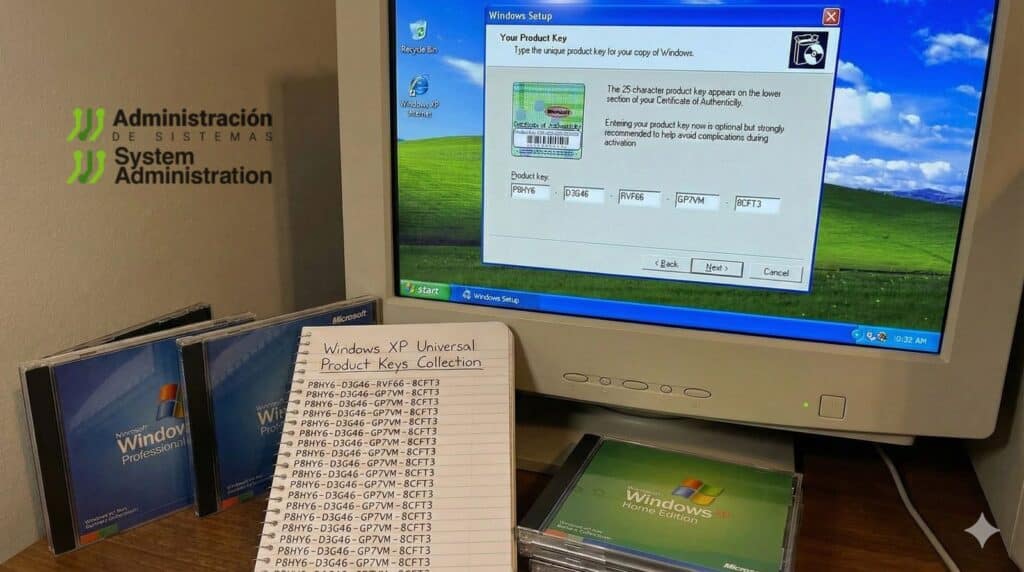
A public GitHub repository claiming to compile “universal” Windows XP product keys has surged in attention, resurfacing a familiar tension in tech culture: where “preservation” ends and license circumvention begins.
The project, hosted on GitHub as Fuwn/xp, presents itself as a comprehensive collection of Windows XP keys across multiple editions and channels, framed as a practical resource for people who still rely on the operating system for legacy workflows. But the sudden visibility of such a list also puts a spotlight on a reality the industry has tried to leave behind: Windows XP may be obsolete by official standards, yet it persists in edge cases where “just upgrade” isn’t a viable answer.
At the same time, posting activation keys in a widely accessible, searchable repository creates an obvious risk: it lowers the barrier for unlicensed installs — and invites the kind of takedown scrutiny that platforms like GitHub explicitly handle through copyright processes.
Windows XP is long out of support — and that matters more than nostalgia
Windows XP’s endurance is, in part, a testament to how deeply it embedded itself into both consumer and professional computing. But from a security standpoint, it is firmly in the past. Microsoft ended extended support for Windows XP on April 8, 2014, meaning no further security updates for most users after that date.
That end-of-support line is not a minor footnote. It’s the dividing wall between “aging but maintained” and “forever vulnerable.” In 2026, connecting an unpatched XP machine to today’s internet is not simply “risky”; it is structurally incompatible with modern threat realities. Even if an XP setup appears to “work fine,” the absence of ongoing security patches and contemporary defenses turns routine browsing, email, and file transfers into potential entry points.
This is why the most responsible legacy-XP discussions rarely start with keys — they start with containment: isolation, segmentation, virtualization, and plans to retire the dependency.
Key vs. license: the confusion at the center of the controversy
One reason key collections travel so quickly is that they exploit a widespread misconception: that a product key equals the right to use the software. In reality, a key is a technical mechanism; a license is the legal permission.
Windows XP shipped through multiple channels:
- Retail copies sold to individuals
- OEM licenses tied to specific manufacturers or machines
- Volume licensing aimed at organizations and large deployments
The Fuwn/xp repository itself references these distinctions, including volume-licensing terminology, while describing certain images as “easiest to find on the internet.” That phrasing is revealing: it implicitly acknowledges the informal distribution ecosystem where keys and installation media often travel together — sometimes far from legitimate licensing boundaries.
This is also where the ethical framing becomes hard to ignore. A repository can be presented as documentation, but a curated list of activation keys is not neutral in effect: it can enable unlicensed installations, regardless of intent.
Windows XP Professional 32-bit Edition
SP3 VOL
M6TF9-8XQ2M-YQK9F-7TBB2-XGG88
MRX3F-47B9T-2487J-KWKMF-RPWBY
QC986-27D34-6M3TY-JJXP9-TBGMD
- CM3HY-26VYW-6JRYC-X66GX-JVY2D
- DP7CM-PD6MC-6BKXT-M8JJ6-RPXGJ
- F4297-RCWJP-P482C-YY23Y-XH8W3
- HH7VV-6P3G9-82TWK-QKJJ3-MXR96
- HCQ9D-TVCWX-X9QRG-J4B2Y-GR2TT
- K2CXT-C6TPX-WCXDP-RMHWT-V4TDT
- QHYXK-JCJRX-XXY8Y-2KX2X-CCXGD
- MFBF7-2CK8B-93MDB-8MR7T-4QRCQ
- 2QQ6J-HGXY3-VGH23-HYQDC-BYR2D
- CM3HY-26VYW-6JRYC-X66GX-JVY2D
- T72KM-6GWBP-GX7TD-CXFT2-7WT2B
SP3 VLK
TQMCY-42MBK-3R4YG-478KD-7FY3M
- DG8FV-B9TKY-FRT9J-6CRCC-XPQ4G
- RFYPJ-BKXH2-26FWP-WB6MT-CYH2Y
- 7HPVP-8VHPV-G7CQ3-BTK2R-TDRF3
- DG8FV-B9TKY-FRT9J-6CRCC-XPQ4G
- CXGDD-GP2B2-RKWWD-HG3HY-VDJ7J
- RK7J8-2PGYQ-P47VV-V6PMB-F6XPQ
- T44H2-BM3G7-J4CQR-MPDRM-BWFWM
- XW6Q2-MP4HK-GXFK3-KPGG4-GM36T
SP3 VOL MSDN
MRX3F-47B9T-2487J-KWKMF-RPWBY
SP3 HP
P2BXT-D7Y8P-F6WF2-HYXY9-49TJD
SP3 OEM SONY
K7RGC-CDXYJ-FTYH2-Y3VVV-KBYC7
SP3 IBM
TW8WB-MKT89-FRD3V-H6CGJ-6JW83
ACER
KDD3G-HGVGM-M24P4-6BMMY-9XHF8
DELL
KG7G9-67KHV-4FQKV-4DYXK-BHQTJ
LENOVO
VF4HT-MPWB8-TWV6R-K6QM4-W6JCM
SP3 OEM THTF
M68XC-TX2C9-PKK8H-GP8JH-RC8XB
SP3 OEM COMPAQ
KYKVX-86GQG-2MDY9-F6J9M-K42BQ
FUJITSU OEM
C873T-F3X3M-9F6TR-J26GM-YTKKD
Pro SP3 OEM FOUNDER
F4G2M-BH2JF-GTGJW-W82HY-VMRRQ
Home SP3 OEM FOUNDER
K72PX-D96QW-RCHB9-3P96F-YQBCY
Home OEM Haier
GYFDM-KCXHW-6GFGQ-JQ9FH-B4TRY
SP2 OEM HP
P2BXT-D7Y8P-F6WF2-HYXYP-49TJD
Home OEM
JQ4T4-8VM63-6WFBK-KTT29-V8966
Home Retail
RH6M6-7PPK4-YR86H-YFFFX-PW8M8
Media Center
- C4BH3-P4J7W-9MT6X-PGKC8-J4JTM
- B2Y39-43MG6-MMGRG-7VKCF-VXMCM
Professional Corp
XP8BF-F8HPF-PY6BX-K24PJ-TWT6M
Professional OEM
- XJM6Q-BQ8HW-T6DFB-Y934T-YD4YT
- WRKF9-4FQ88-XTQYB-8KV6J-7TJR8
Professional Retail
CD87T-HFP4C-V7X7H-8VY68-W7D7M
Professional SP2 VOL
CCMWP-99T99-KCY96-FGKBW-F9WJT
Plus
DMC3M-2PD9R-9F8RY-KCKYC-JPXWM
Windows Server 2003 VOL
KJTHV-V4BVY-6R9JK-YJM7X-X7FDY
Office 2003 VOL
GWH28-DGCMP-P6RC4-6J4MT-3HFDY
SP3
- V2C47-MK7JD-3R89F-D2KXW-VPK3J
- T7C4Q-47VGM-R7J6B-VPJ84-JPJ93
- FY32F-XF3B6-277BF-YWBQF-GVRX3
- XBC76-H7RCG-KQPKH-QK8PT-7D789
- VQP4F-V47P8-BBDXK-R7K9Q-B42BB
- TBHJK-W4DPH-9D267-H93VR-WMXQJ
- JBH94-K6WKQ-YHTD6-XJFV9-WJP7Y
- C626F-H4CCJ-PWR8R-2RB9K-3G3HD
- HRCXT-BY6WB-VBM83-CMBXF-BVWYY
- W733W-GWPGB-37X4T-BRD7P-JVT2D
- VHBCM-H2YTW-TCYRR-QFTV6-XQQBG
- XGVKJ-C8FB2-9GXXF-7DTG4-RYXFB
- BMR29-HX9Y6-X6GTX-GKGGX-K8VV6
- RHGJC-9CPJC-8M8F6-KYXCP-FRGC6
- J3GMD-RMM3Q-HKC62-TV8Y8-246Q3
- 9HFGJ-KERJT-IOQ73-8YR78-93UT5
- JKJIF-YUQEW-786DM-NBDSH-GUIRE
- TQ23P-98R87-89340-83QOI-WEJF8
- DFHNG-RGTFR-89T57-6983P-UROFD
- SJHGL-IUWRT-89023-48HR4–U4938
- WHTKJL-RDHF8-7TG64-5ES42-76RY4
- 23YU7-65RK0-HEVJK-SDAGI-OP265
SP2
- KLSDJ-FERIO-UT843-U8JF8-43Y84
- 93UJF-KDSIU-YT78Y-SDKJF-IOEWJ
- FIOSD-FUHY7-ERTY7-843UR-OEJFK
- DSHFG-8734Y-78927-4932J-FKJSD
- FVHER-UIYT7-84358-93047-48294
- 2307T-78436-YKJDF-SLHNV-JKSDH
- JKSDH-FGSDH-FKJSD-MNF32-98784
- 79Y5F-I34QY-65784-30UJR-DKSDG
- OUI8W-Y3458-7934R-UREJG-KPWER
- UIT89-0432U-Y0UTD-JSMCF-KLASD
- HIUWE-Y4I78-34U5T-98234-U782T
Unknown
- JJWKH-7M9R8-26VM4-FX8CC-GDPD8
- Q3R8Y-MP9KD-3M6KB-383YB-7PK9Q
- QB2BW-8PJ2D-9X7JK-BCCRT-D233Y
- FCKGW-RHQQ2-YXRKT-8TG6W-2B7Q8
- F6PGG-4YYDJ-3FF3T-R328P-3BXTG
- FM9FY-TMF7Q-KCKCT-V9T29-TBBBG
- RK7J8-2PGYQ-4P7VL-V6PMB-F6XPQ
- KWT78-4D939-MRKK9-64W8C-CPF33
- BJXGH-4TG7P-F9PRP-K6FJD-JQMPM
- RBDC9-VTRC8-D7972-J97JY-PRVMG
- DW3CF-D7KYR-KMR6C-3X7FX-T8CVM
- MQPD6-C748R-FMRV6-8C3QK-79THJ
- DTWB2-VX8WY-FG8R3-X696T-66Y46
- DW87C-76RXP-LLK6C-3FJ2J-2908F
Windows XP Professional 64-bit Edition
SP2 VOL
- B66VY-4D94T-TPPD4-43F72-8X4FY
- VCFQD-V9FX9-46WVH-K3CD4-4J3JM
WBD2T-3V7TW-GWJW6-HC6CK-R7MBJ
WPH7P-DQMY8-97MWQ-Y26V7-3C4HM
- M4733-B8WX6-G999M-P3YR6-TDYVM
- PFC3B-RTB4W-F3Q44-JWQQR-447BB
HH7VV-6P3G9-82TWK-QKJJ3-MXR96
F4297-RCWJP-P482C-YY23Y-XH8W3
MRX3F-47B9T-2487J-KWKMF-RPWBY
QC986-27D34-6M3TY-JJXP9-TBGMD
- C4FPJ-HQCGP-QD3XC-2JF34-FT8Y6
- CH6BH-G7PCX-KTM8K-WRKBD-HC7TW
- M4676-2VW7F-6BCVH-9QPBF-QBRBM
- DW3CF-D7KYR-KMR6C-3X7FX-T8CVM
- 7FMM3-W4FMP-4WRXX-BKDRT-7HG48
- B2RBK-7KPT9-4JP6X-QQFWM-PJD6G
- DM8R3-3VBXF-F7JRX-FJ7P4-YD3HM
- FCKGW-RHQQ2-YXRKT-8TG6W-2B7Q8
- TCP8W-T8PQJ-WWRRH-QH76C-99FBW
- CKY24-Q8QRH-X3KMR-C6BCY-T847Y
- RBDC9-VTRC8-D7972-J97JY-PRVMG
- R3MGD-3H6HQ-RDRCR-KJXTM-3C8JW
R7Q3G-CHTW9-CCQV9-G7DX6-RVTDY
DRYCH-Q9RY7-YH62D-K98QM-KCGQ8
- DQ3PG-2PTGJ-43FP2-RPRKB-QBYRY
- DQ3PG-2PTGJ-43FP2-RPRKB-QBYRY
- BXDQR-2KCR9-2VMJK-WDW94-PH2PB
- HC47V-BMGVC-MWB4X-KJTTD-RMH4Y
- BRC43-2CBV7-TCB9W-WHRGP-39XWM
- BMHW2-GR289-D3PR9-JQF6P-YPQJM
- DB8YF-HTGKP-6C948-3BHYD-PH2PB
Windows XP Home Edition x86
- JT42G-DDBCX-WTDMB-8WCT2-JGGH8
- V7BWD-G9YR6-9FG87-8Q2HV-YJGTG
- PW6PT-TCGBR-HKTCT-GKKY6-QGK86
- MT8JF-T82RK-R6C82-3YGHH-224PP
- G7BR9-8QV29-3QFHP-F84WG-X9PYQ
- XYRYX-XCG6K-W7PK8-2CTQQ-86DWR
- VTYH4-P88R2-MW38B-Q62KT-48F7Y
- MY7CJ-VQWBC-36JWH-6CJ37-TQVHC
- XMCM6-DKYCQ-2BHQH-4PCHR-TBJCR
- GQFP7-XCJ6K-GVQDY-BVMTK-V2JKY
Why GitHub is a battleground for takedowns
GitHub’s role in these episodes is largely procedural. The platform provides tools for hosting code and text — and it also provides a clear path for rights-holders to request removals when content is believed to be infringing.
GitHub’s DMCA takedown policy explains how copyright owners can request that allegedly infringing content be changed or removed, and how GitHub processes those notices. The company also maintains transparency around takedown requests via its public github/dmca repository, which archives notices and counter-notices (with private data redacted).
The practical implication is simple: even if something is publicly visible today, that does not guarantee it will remain available — or that using it is lawful.
The “legendary leak” problem: XP keys have a long history of going public
Long before GitHub existed, Windows XP was associated with one of the most notorious licensing episodes in consumer software history: a widely circulated volume license key that became a meme, a shorthand for piracy, and part of early-2000s internet folklore.
In late 2025, a detailed account of that episode circulated again after commentary from a veteran Microsoft developer helped explain how the leak happened and why it worked so well at the time — including the way certain volume-license media could bypass activation checks.
That story matters here because it contextualizes why key lists are not a new phenomenon. The difference is distribution power: a single GitHub repository can be forked, mirrored, indexed, and replicated across the web in hours.
Do these keys even work? Often, not as cleanly as people expect
Viral key lists tend to promise certainty and deliver friction.
Even in legitimate contexts, Windows XP activation behavior depends heavily on matching the right key to the right edition, channel, and installation media. What works for an OEM build may fail on a retail installer. What matches one service pack may not behave the same way with another. In practice, a “big list” is not a guarantee — and user reports in retro/XP communities routinely mention keys failing validation or being rejected, especially when paired with mismatched installers or unofficial images.
More importantly, “it activates” is not the end of the story. If a system is brought online, the security risks do not disappear just because the product key was accepted.
The safer conversation: how organizations keep XP alive without inviting disaster
There are legitimate scenarios where XP still exists — not because someone loves it, but because a critical tool or piece of equipment depends on it. In those cases, the playbook tends to focus on risk control, not key hunting:
1) Air-gap or strict network isolation
Keep XP off the internet. If it must connect to a network, segment it heavily and restrict inbound/outbound traffic to the bare minimum.
2) Virtualization where feasible
Running XP inside a virtual machine can make it easier to snapshot, restore, and contain. It also reduces the need to keep fragile physical hardware alive.
3) Controlled file transfer
If files must move in and out, do it via scanned, managed pathways — not ad-hoc USB swapping or open shares.
4) A long-term migration plan
Even if replacement isn’t immediate, organizations that take XP seriously treat it as technical debt with a deadline, not a permanent fixture.
This is also why the attention on key repositories can feel misplaced: the real challenge is rarely “how do we activate XP?” It’s “how do we keep a legacy dependency from becoming a security incident?”
A viral repo as a mirror of a bigger issue
The popularity of Fuwn/xp isn’t just about a 20-year-old operating system. It reflects an uncomfortable modern truth: the tech industry is excellent at building new platforms, and often less effective at offering graceful exits from old ones. When legacy software still runs critical processes, users will search for workarounds — and the internet will provide them, sometimes irresponsibly.
That does not mean the answer is to normalize public key distribution. It does mean the industry will keep seeing these flashpoints until legacy computing is treated less like a curiosity and more like an operational reality that needs safer paths forward.
FAQ
Is it legal to use Windows XP today if you have old media?
It can be, if you have a valid license (retail or OEM) and you follow its terms. A product key alone doesn’t necessarily prove you have the legal right to install and use the software.
Why is Windows XP considered unsafe even if it still “works”?
Because Microsoft ended support in 2014, so newly discovered vulnerabilities won’t be patched for typical users.
Can GitHub remove repositories that share license keys?
Yes. GitHub processes copyright complaints via its DMCA policy and publishes many notices through its DMCA transparency repository.
What’s the safest way to keep XP for a legacy app?
Isolate it from the internet, segment it if networking is required, consider virtualization, and maintain a plan to retire the dependency when possible.