
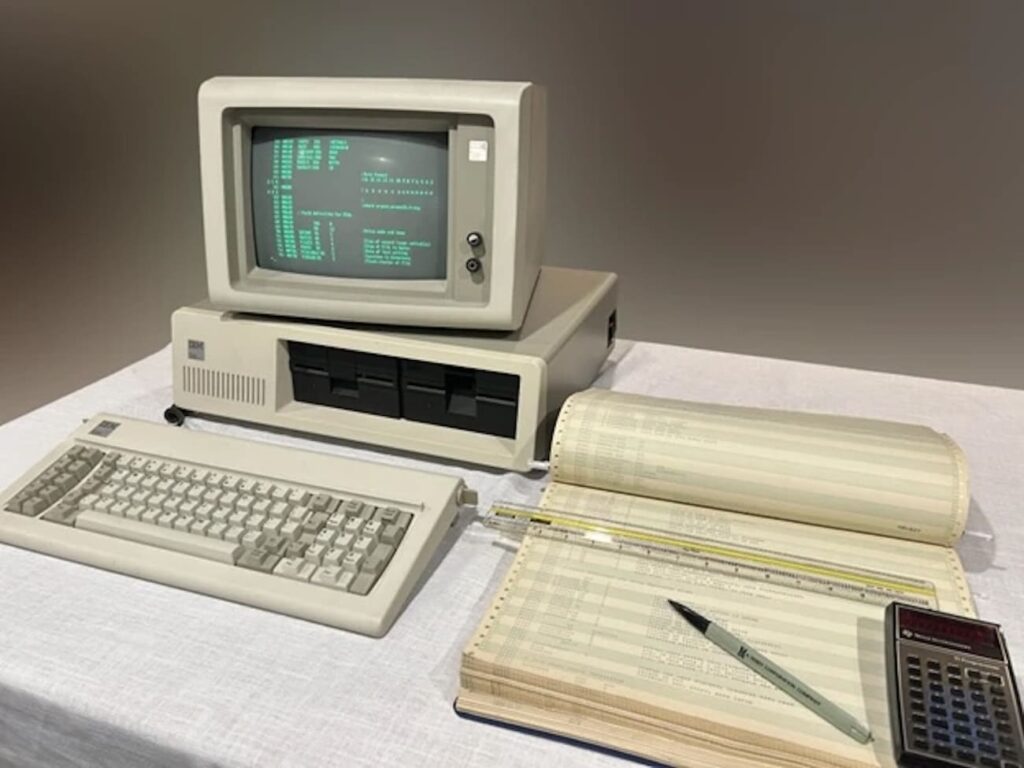
Microsoft has released new historical materials from the DOS operating system to mark the 45th anniversary of 86-DOS 1.00, one of the pieces of software that helped define the modern personal computer. This is not just another publication for nostalgic enthusiasts: the repository offers a rare look at the earliest steps of PC-DOS and MS-DOS, when operating systems were built with assembly language, printed listings, handwritten notes and a very different sense of commercial urgency from today’s software development.
The company had already published the source code for MS-DOS 1.25, MS-DOS 2.11 and MS-DOS 4.0 in previous years. This new release goes even further back. Microsoft describes it as the earliest DOS source code discovered to date, including sources for the 86-DOS 1.00 kernel, several development snapshots of the PC-DOS 1.00 kernel, utilities such as CHKDSK and even listings of the assembler used at the time.
A discovery that goes beyond code
What makes this release especially interesting is not only that the code can now be browsed on GitHub. It is also the way it got there. The materials come from printed listings preserved by Tim Paterson, the programmer who created 86-DOS at Seattle Computer Products. A team of historians and preservationists, led by Yufeng Gao and Rich Cini, worked to locate, scan, transcribe and turn those documents into readable and, in some cases, buildable code.
Microsoft describes these materials as something close to a printed “commit history”. The comparison is useful. These are not just final packaged releases, but specific work-in-progress states, intermediate changes, mistakes, fixes and handwritten notes. For researchers, that makes it possible to reconstruct how an operating system was developed in the early 1980s, before tools such as Git, modern integrated development environments or collaborative platforms became part of everyday work.
The DOS-History/Paterson-Listings repository organises the material into several layers: transcriptions of the printed output, files reconstructed from those listings and source code prepared for browsing or assembly. It also links to the original scans hosted on Internet Archive, allowing readers to compare the paper originals with the digital transcription. This dual documentary and technical reading is what turns the release into a small act of software archaeology.
The known contents include ten bundles of continuous-feed paper. Among them are files such as MSDOS.LST, 86DOS.A86, 86DOS.ASM, CHKDSK.A86, EDLIN.DIF and ASM.PRN. There are also later materials related to Microsoft’s BASIC-86 Compiler runtime library and examples such as PAINT.ASM or CIRCLE.ASM, although some bundles have not yet been transcribed. The repository invites collaboration, but limits contributions to direct transcriptions or typo corrections in order to preserve historical accuracy.
From Seattle Computer Products to the IBM PC
The story of DOS is also the story of an opportunity that changed Microsoft’s future. Before becoming the software giant it is today, Bill Gates and Paul Allen’s company had built a position through BASIC interpreters. When IBM was preparing its personal computer, it needed an operating system, and Microsoft ended up playing a central role in that decision.
86-DOS had been developed by Tim Paterson at Seattle Computer Products for systems based on 8086 processors. It was a pragmatic answer to the needs of the time: a disk operating system for a new generation of hardware compatible with the x86 architecture. Microsoft licensed that software, adapted it for the IBM PC, and the result eventually reached the market as PC-DOS for IBM and MS-DOS for other manufacturers.
The deal was small compared with what followed, but its consequences were enormous. DOS became the foundation of the PC-compatible world for years, and much of the consumer and business software industry grew on top of it. Windows did not emerge from nowhere: its earliest versions coexisted with MS-DOS and relied on that world of commands, batch files, A: and C: drives, and programs launched from a text screen.
The new publication also helps organise a part of that history that has long been mixed with internal versions, OEM agreements and different commercial names. There was never a widely sold product called exactly “MS-DOS 1.0”, while IBM marketed PC-DOS 1.0 and Microsoft distributed versions to manufacturers. Having an earlier, clearly identified 86-DOS 1.00 reference now helps explain how those first branches were connected.
Why releasing a 45-year-old operating system matters
At first glance, an operating system from 1981 may seem irrelevant to today’s technology. It is not. The DOS code shows how basic problems were solved with very limited resources: disk management, program loading, commands, memory, files and compatibility with early hardware. It is a direct lesson in simplicity, constraints and system design.
It also has cultural value. The history of computing cannot be preserved only by putting machines behind glass. It also needs code, manuals, listings, internal notes, development tools and first-hand traces from the people who built those systems. Without that material, the great platforms of the past are reduced to overly neat stories, reconstructed years later and stripped of the real imperfections of day-to-day engineering work.
The MIT licence adds another important element. The first MS-DOS source code releases, when they were made available through the Computer History Museum, came with fairly restrictive conditions for research and educational use. Later republications on GitHub under more permissive licences changed the practical scope of those materials. Researchers, teachers, retrocomputing enthusiasts and developers can now study, modify and redistribute the code with far more freedom.
That does not mean there will be a new wave of software based on 86-DOS. Projects such as FreeDOS are much more useful for running DOS programs on modern environments or old machines. The interest of this release lies elsewhere: it allows us to read the DNA of a platform that shaped the rise of the PC and to understand how a mix of technical decisions, commercial agreements and historical timing placed Microsoft in a privileged position.
The release also fits into a broader trend within Microsoft. In 2025, the company officially released the source code of Microsoft BASIC 6502, another key piece from its early years. Little by little, materials that remained proprietary for decades are being treated as technical heritage. It is striking that a company built on proprietary software is now helping document its origins through open code, but the move makes sense: preserving the past helps explain the present.
Anyone opening the repository will not find a modern, elegant or easy-to-read system. They will find assembly language, old tools, comments from another era and dependencies such as Seattle Computer Products’ ASM assembler and the HEX2BIN utility used to convert Intel HEX objects into binaries. That is precisely why it matters. It is a snapshot of how software was made before the industry became used to abstraction layers, distributed repositories and automated deployment.
The publication of 86-DOS 1.00 does not change Microsoft’s future, but it does shed more light on its origins. It also reminds us of something worth remembering: some of the biggest technological shifts begin with small, imperfect and urgent pieces of software written to solve a specific problem. DOS was one of them. Forty-five years later, its code is once again within everyone’s reach.
Frequently asked questions
What exactly has Microsoft released?
Microsoft has made public historical materials related to 86-DOS 1.00, PC-DOS 1.00 and utilities such as CHKDSK, as well as listings of the assembler used at the time.
How is 86-DOS related to MS-DOS?
86-DOS was developed by Tim Paterson at Seattle Computer Products. Microsoft licensed it, adapted it for the IBM PC, and it became the basis for PC-DOS and MS-DOS.
Can the code be used freely?
The repository is published under the MIT licence, a permissive licence that allows the code to be studied, modified and redistributed with few restrictions.
Why does this release matter if DOS is so old?
Because it helps researchers study how one of the systems that powered the PC-compatible era was born, preserves software history and provides real material on how operating systems were developed in the early 1980s.