
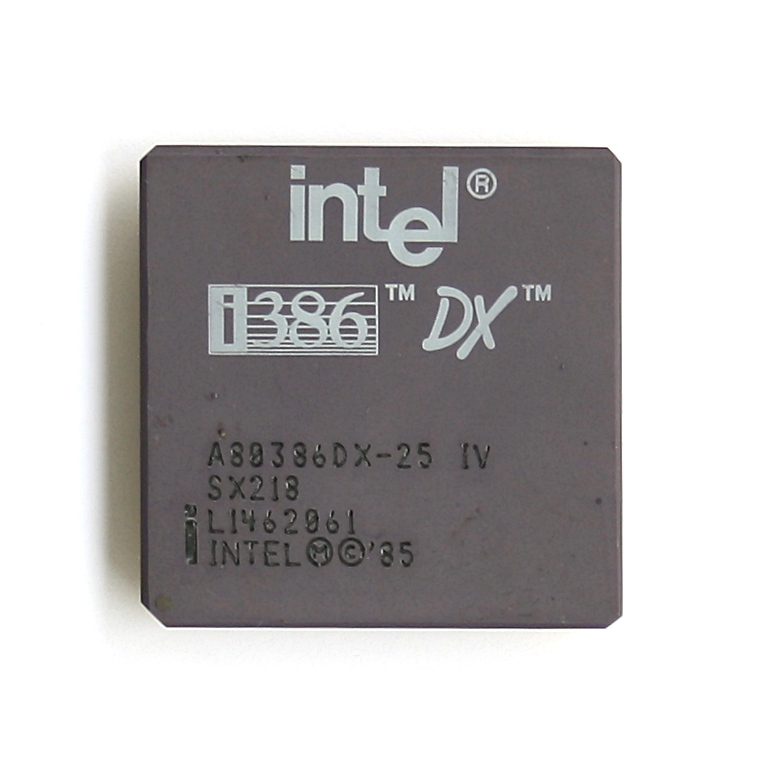
The Intel 80386, also known as the i386 or simply the 386, was not just another processor in the long history of the PC. It was the chip that allowed personal computers to truly enter the 32-bit era, handle far more memory, run more ambitious operating systems and leave behind many of the limitations that had defined home and professional computing in the early 1980s.
Its anniversary, reached in October 2025, offers a good moment to look back at a piece of hardware that now seems modest: 275,000 transistors and an initial clock speed of 16 MHz. But in 1985, those figures placed the 386 in a different league. Intel introduced it on 17 October that year as an evolution of its x86 family, with more than twice the performance of the 286, according to the company’s own historical timeline.
The real leap to 32 bits
Before the 80386, the PC market was dominated by 16-bit processors such as the Intel 80286. That chip had already introduced important improvements, but the 386 took the x86 architecture into a space much better suited to modern software. Its 32-bit registers and data paths made it possible to work with larger addresses and data types, while its design opened the door to more complex systems.
Intel’s own 80386 reference manual described it as a 32-bit microprocessor designed for multitasking operating systems. It could address up to 4 GB of physical memory and up to 64 TB of virtual memory, an enormous figure for the time, when many personal computers worked with amounts of memory that today seem almost symbolic.
The difference was not only about being faster. The 386 included memory management, protection and paging mechanisms that made it possible to separate processes more effectively, isolate tasks and build more stable and secure environments. It also offered three operating modes: protected mode, real mode and virtual 8086 mode. The latter was especially important because it allowed legacy 16-bit software to run inside a more advanced environment, which was essential to ensure that the technological leap did not suddenly leave existing software behind.
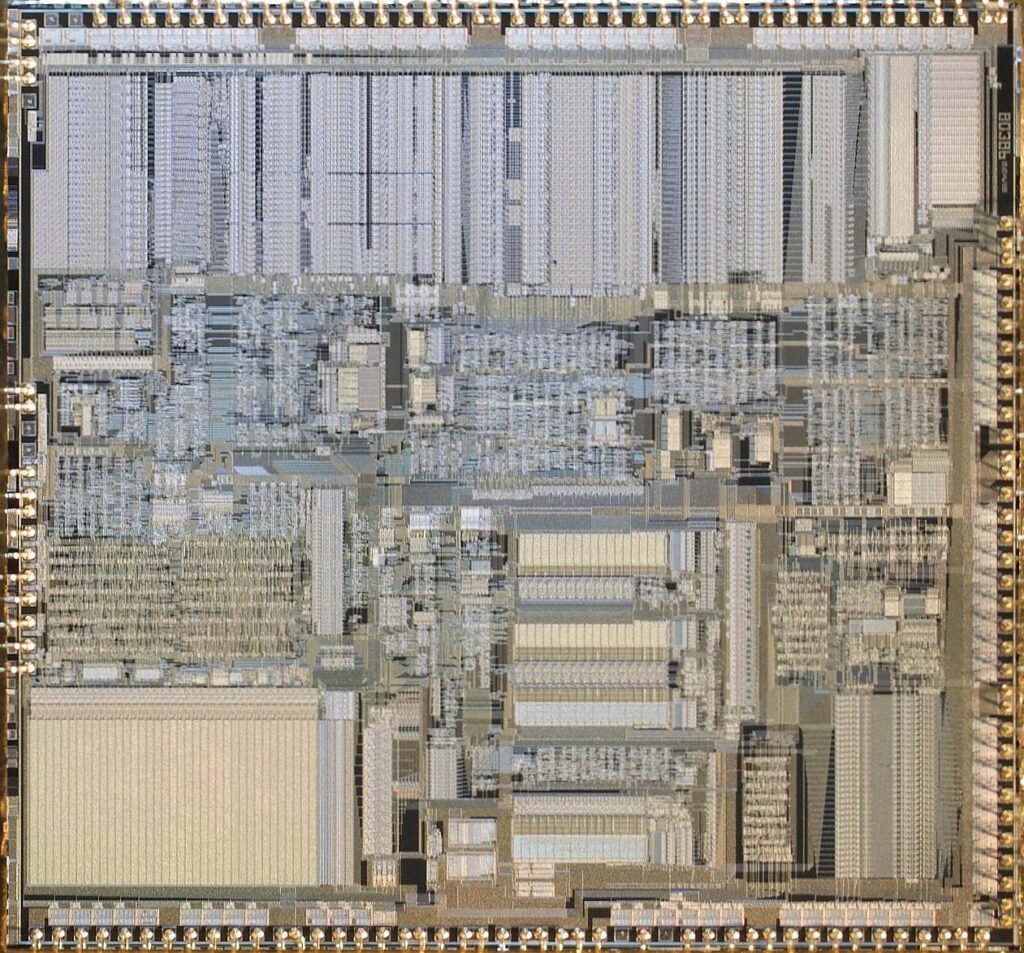
That compatibility was one of the 386’s greatest strengths. Intel did not break with the past; it wrapped it inside a more capable architecture. For companies, developers and users, that meant moving forward without throwing away years of investment in DOS applications and familiar tools.
Compaq moved ahead of IBM
The other part of the story cannot be understood by looking only at the silicon. In the early years of the PC, IBM had set the pace for the market. Its decisions influenced manufacturers, developers and buyers. But the first personal computer to include the Intel 80386 did not come from IBM. It came from Compaq.
The Compaq Deskpro 386 was announced in September 1986 and became the first commercial computer based on the new chip. The Computer History Museum describes that move as a victory for Compaq over IBM in the race to bring the 386 to market. It also notes that the new processor integrated 275,000 transistors and placed the PC at a level of performance previously associated with larger systems.
That launch carried a clear industrial message. Compaq was no longer acting merely as an IBM-compatible manufacturer, but as a company capable of setting the pace in the evolution of the PC standard. The Deskpro 386 showed that the market could move without always waiting for IBM. Intel manufactured the processor, Microsoft prepared the software ground and Compaq put the machine into the hands of customers who wanted more power.
That combination helped strengthen the PC-compatible ecosystem. The x86 architecture grew not because it belonged to a single company, but because many companies could build around it. Compatibility, often less eye-catching than pure innovation, ended up becoming a huge advantage.
From Windows to Linux: the 386 as a software platform
The impact of the Intel 80386 was especially visible in operating systems. Microsoft released Windows/386 in the late 1980s as a version capable of taking advantage of some of its capabilities, and Windows 3.0 later popularised the so-called “386 Enhanced Mode”, which made it possible to run multiple DOS sessions and use virtual memory more effectively. The PC began to look less like a machine dedicated to one task and more like a general platform for working with several applications.
Linux was also born very close to the 386. The release notes for version 0.01 of the kernel, preserved by kernel.org, described the project as a free Minix-like kernel for i386-based AT machines or higher. That was not a minor detail: the 386’s capabilities, especially protected mode and paging, gave Linus Torvalds a reasonable foundation on which to build a Unix-like system on PC hardware.
For years, the word “i386” was almost synonymous with Linux on the PC architecture. Many distributions used that name to refer to 32-bit versions compatible with a wide range of x86 processors. Specific support for the original Intel 80386 eventually disappeared from the kernel much later, in 2012, when maintaining compatibility with such an old CPU added unnecessary complexity.
The 386 did not disappear quickly either. Although the Intel 80486 arrived in 1989 and the Pentium in 1993, the architecture introduced by the 80386 remained present for decades. Tom’s Hardware recalls that Intel continued producing the chip for certain embedded uses until 2007, long after it had stopped being relevant in consumer PCs.
Its legacy is still alive in less visible ways. IA-32, the 32-bit instruction set introduced with the 386, became the foundation for entire generations of x86 processors. Even when the market moved to x86-64, backward compatibility preserved a historical line connecting today’s PCs with that design from the mid-1980s.
The Intel 80386 matters because it helped turn the personal computer into a serious platform for advanced operating systems, software development, networking, multitasking and professional applications. It was not the first important microprocessor in history, nor was it the fastest for very long, but it remains one of the chips that best explains how the PC moved beyond its 16-bit legacy and began to approach modern computing.
Frequently asked questions
When was the Intel 80386 launched?
Intel introduced the 80386 on 17 October 1985. Its 40th anniversary was reached in October 2025.
Why was the Intel 386 so important?
Because it brought the x86 architecture into the 32-bit era, made it possible to address up to 4 GB of physical memory and added key features for multitasking, virtual memory and more advanced operating systems.
What was the first PC with an Intel 80386?
The first commercial personal computer based on the Intel 80386 was the Compaq Deskpro 386, announced in September 1986.
What was the relationship between the 386 and Linux?
The first versions of Linux were developed for i386-based AT machines or higher, so the 386 was directly connected to the origins of the operating system.